Clear Ice vs Cloudy Ice: What Is the Difference and Does It Matter?
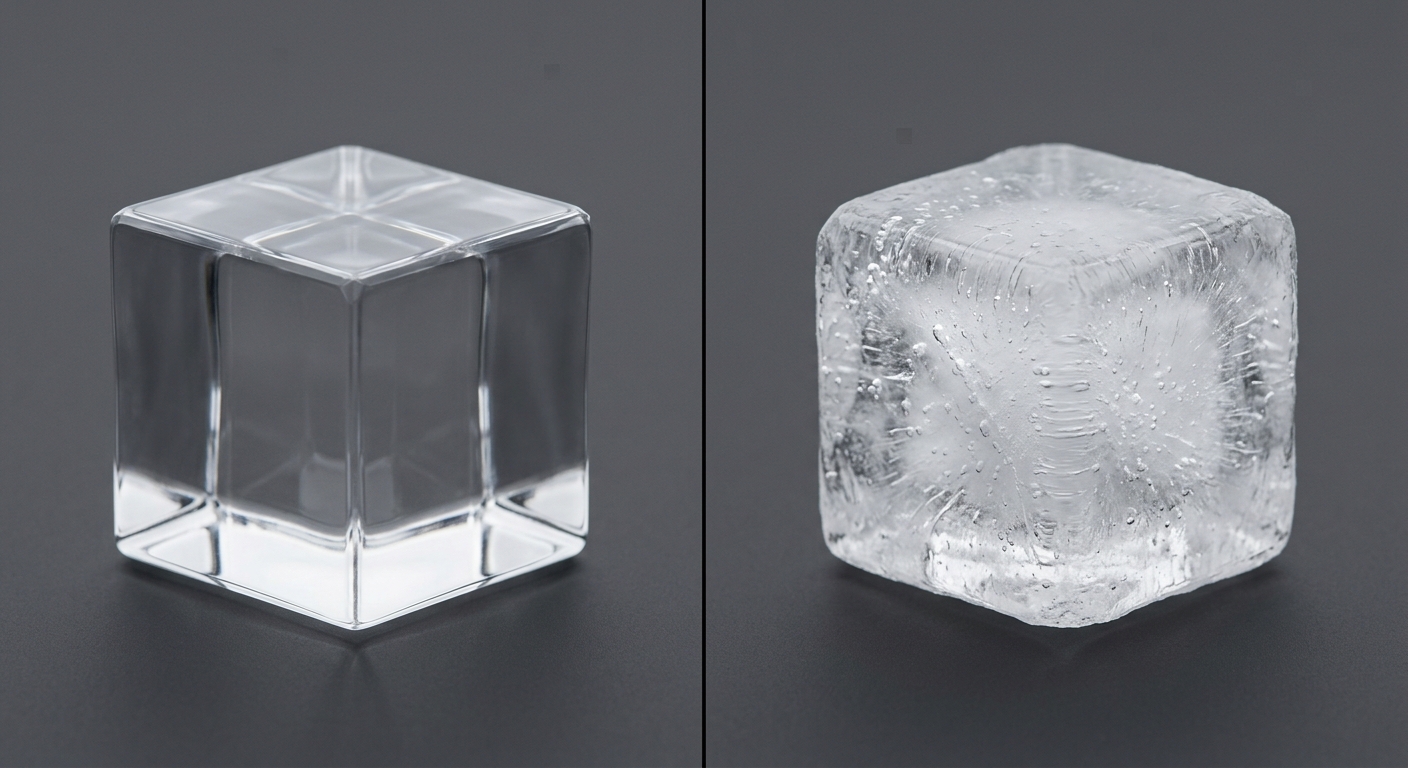
Pull a tray out of the freezer and you’ll usually find two kinds of cubes in the same batch: a few that look like solid glass, and a handful with a chalky white core. That’s the everyday version of clear ice vs cloudy ice, and it isn’t random at all — it’s chemistry and physics, not luck. In this guide we’ll cover what actually separates the two, whether clear ice tastes better, and whether it’s true that it melts more slowly once it hits your glass.
What Makes Ice Cloudy? The Science Behind Opacity

Cloudy ice isn’t automatically a sign of dirty or low-quality water. You can freeze perfectly filtered, even bottled, water in a standard ice cube tray and still end up with a cloudy center — because opacity is mostly about how the water freezes, not what’s dissolved in it. As water cools, dissolved air and minerals get pushed ahead of the forming ice crystals. In a regular tray, freezing happens from all six sides at once, so that trapped air and those minerals have nowhere to go but the center of the cube, where they collect as thousands of microscopic bubbles. That’s what makes ice cubes clear vs cloudy from the exact same water source: two trays, same tap, same filter — one uncontrolled freeze, one controlled — and you get two completely different results.
What Makes Ice Clear? How Crystal Clear Ice Is Produced

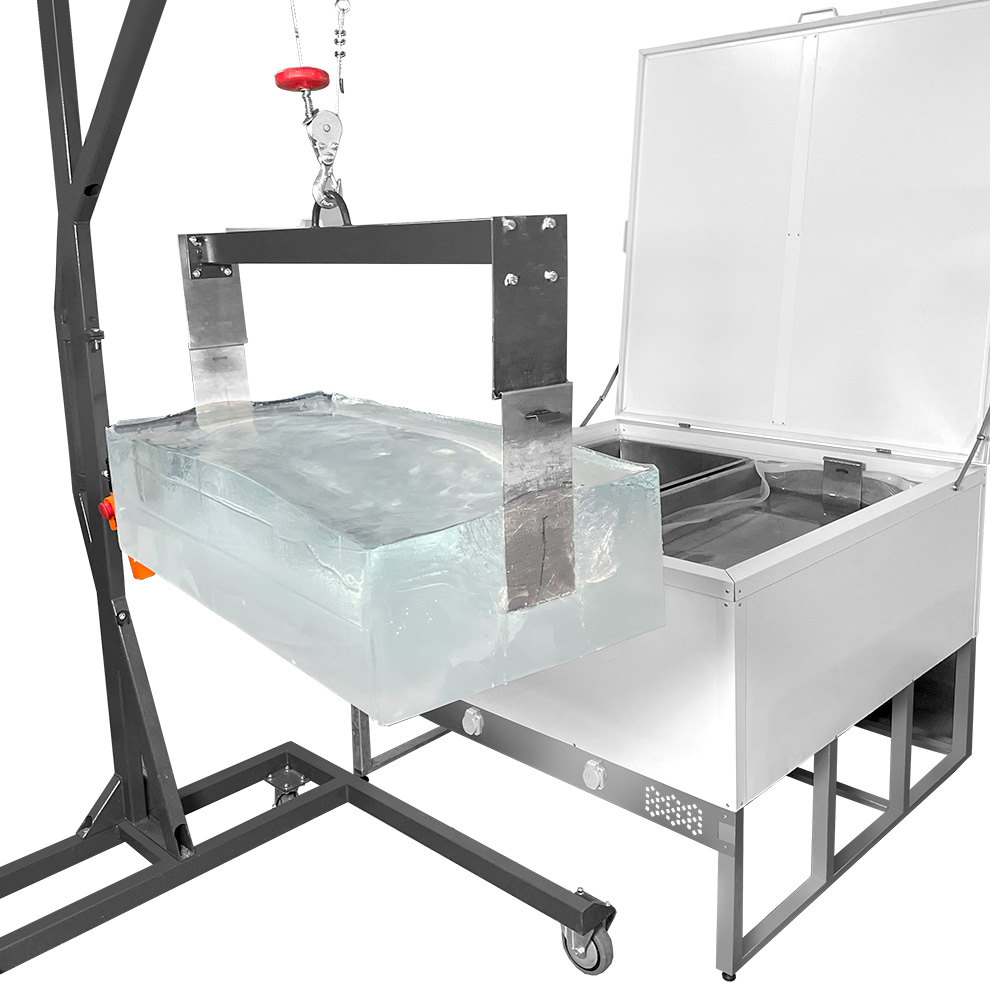
Clear ice is made by controlling the direction the water freezes in, so air and impurities are pushed out of the ice instead of getting trapped inside it. This is commonly known as directional freezing — freezing the water from one side only, usually top-down, while the rest of the water stays in motion or insulated, so dissolved gas keeps escaping until the very last layer solidifies. That’s the basic mechanism behind clear vs cloudy ice at a molecular level, and it’s the same principle — scaled up — behind every professional ice block maker used in premium bars, hotels, and ice-production businesses.
Clear Ice vs Cloudy Ice: A Side-by-Side Comparison

Here’s a quick clear ice vs cloudy ice comparison at a glance:
| Clear Ice | Cloudy Ice | |
| Appearance | Transparent, glass-like | Opaque, white or milky center |
| Freezing method | Directional (controlled) freezing | Freezes from all sides at once |
| Air/mineral content | Pushed out during freezing | Trapped inside the cube |
| Melt rate | Slower, more even | Faster, uneven |
| Dilution of drinks | Minimal, controlled | Faster, can water down a drink |
| Typical use case | Cocktails, whiskey, premium service | Everyday home freezer trays |
So, what makes ice clear vs cloudy really comes down to one variable — freezing direction — and that single variable changes almost everything else on the list above, from how a cube looks in the glass to how long it survives in it.
Does Clear Ice Taste Better Than Cloudy Ice?

Ice itself is just frozen water, so in the strictest sense it has no flavor of its own. But does clear ice taste better in practice? Most bartenders and guests say yes — indirectly. Cloudy ice carries trapped air and mineral particles that can release faintly stale or “freezer” notes as the cube melts, especially in a freezer that also stores food. Clear ice, having pushed most of that trapped material out during freezing, melts cleaner and doesn’t introduce those off-notes into a drink. So the honest answer to does clear ice taste better is that the ice doesn’t add flavor either way — but clear ice is far less likely to subtract from the flavor of what’s already in the glass.
Clear Ice vs Cloudy Ice Melting Rate: Why It Matters for Drinks
Density is the real story behind clear ice vs cloudy ice melting rate. Cloudy ice is riddled with microscopic air pockets, and air insulates far less efficiently than solid ice — so a cloudy cube melts faster and less evenly, often collapsing from the inside out. A clear, dense cube melts slowly and predictably from the outside in. Put cloudy ice vs clear ice side by side in two glasses of the same spirit and the cloudy cube will visibly shrink first, releasing more meltwater and diluting the drink faster.
Why This Matters for Bars and Premium Hospitality

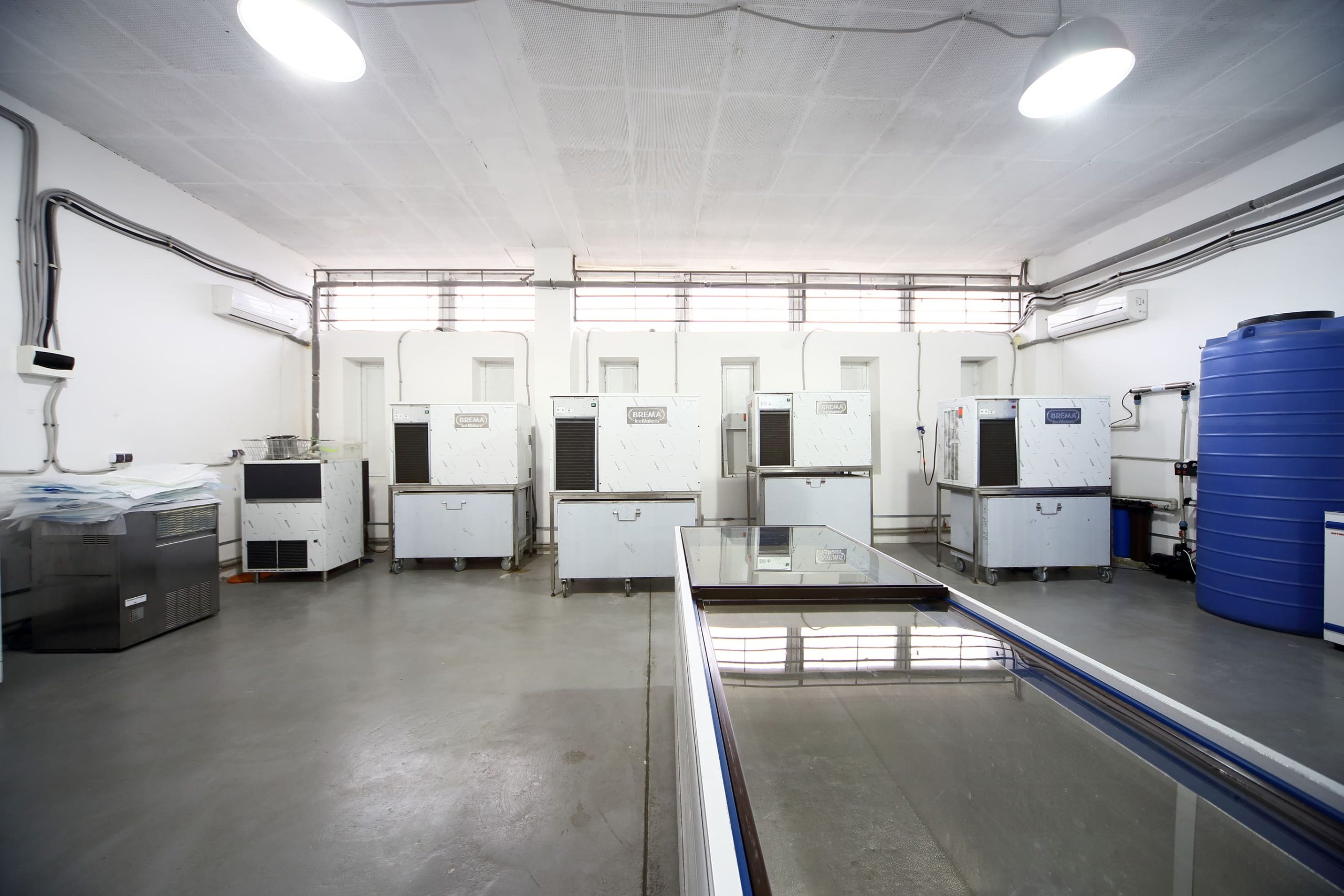
For a cocktail bar, hotel, or premium hospitality venue, melt rate isn’t a curiosity — it’s a service standard. A slow-melting, clear cube keeps a Negroni or an Old Fashioned at the intended strength for longer, holds its shape in a highball, and photographs better for every drink that ends up on social media. That’s also why comparing clear ice vs regular ice from a standard under-counter machine matters for volume-driven venues: regular ice melts too fast for slow-sipped spirits, while a purpose-built ice block maker — cut down into clear ice cubes vs cloudy ones sourced from a standard machine — gives bars consistent, professional-grade ice without changing suppliers every season.
Conclusion
The difference between clear ice vs cloudy ice comes down to one thing: how the water freezes. Directional freezing pushes air and minerals out of the cube, leaving dense, transparent ice that melts slowly and evenly; freezing from all sides traps that air inside, producing a cloudy cube that melts fast and unevenly. Now that you know what makes ice clear vs cloudy, the takeaway for any bar or premium drink program is simple — clear ice isn’t just better-looking, it’s functionally better ice.
FAQ
What is the difference between clear ice and cloudy ice?
Clear ice is made using directional freezing, which pushes trapped air and minerals out of the cube as it forms. Cloudy ice freezes from all sides at once, trapping that air and mineral content inside, which is what gives it a white, opaque center.
Does clear ice taste better than cloudy ice?
Ice has no flavor on its own, but does clear ice taste better in a practical sense — yes, generally. Clear ice melts without releasing trapped air or mineral particles, so it's less likely to add faint off-notes to a drink than cloudy ice can.
Does clear ice melt more slowly than cloudy ice?
Yes. Clear ice is denser because it has far fewer trapped air pockets, and denser ice insulates and melts more slowly than cloudy ice, which is riddled with air and melts faster and less evenly.
What makes ice clear vs cloudy?
The direction of freezing. Clear ice freezes gradually from one direction (directional freezing), pushing air and impurities out ahead of the ice. Cloudy ice freezes from every side at once, trapping that air inside the cube.
Is clear ice better for cocktails?
For most spirit-forward cocktails, yes. Clear ice melts slower and more evenly, keeping the drink at the right strength and temperature for longer, and its glass-like look is part of the presentation bartenders and guests both notice.



MORE ABOUT THE AUTHOR