What Water is Best for an Ice Machine and Why Does Boiled Water Freeze Faster?
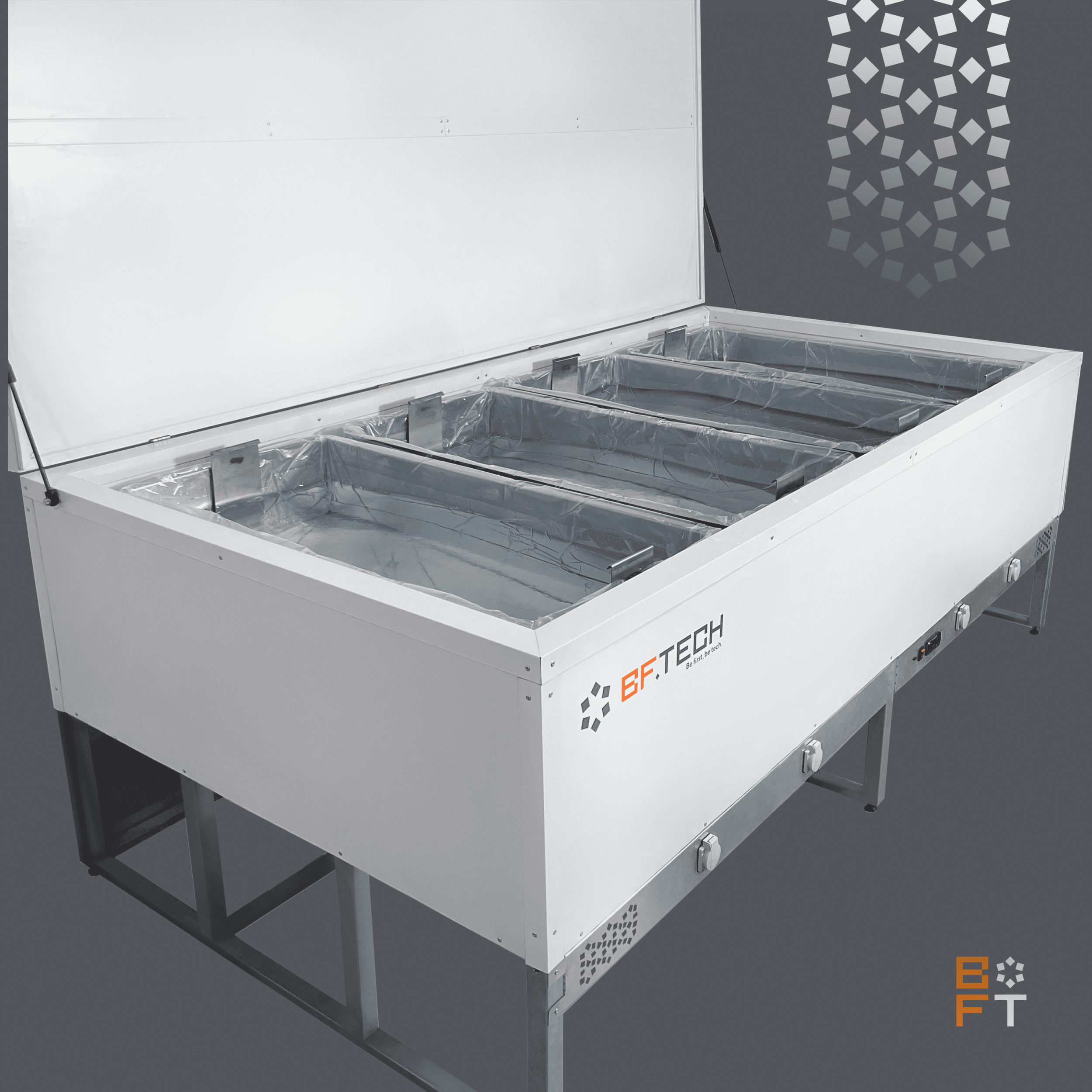
Ice machines and cube cocktails became a popular innovation in different spheres like cocktail crafting, catering, making ice sculptures and others. In this article we will talk about the important aspect of how to choose the best water for your ice block maker machine and get incredible results all the time.
Why Choosing the Right Water is Crucial for Your Ice Machine
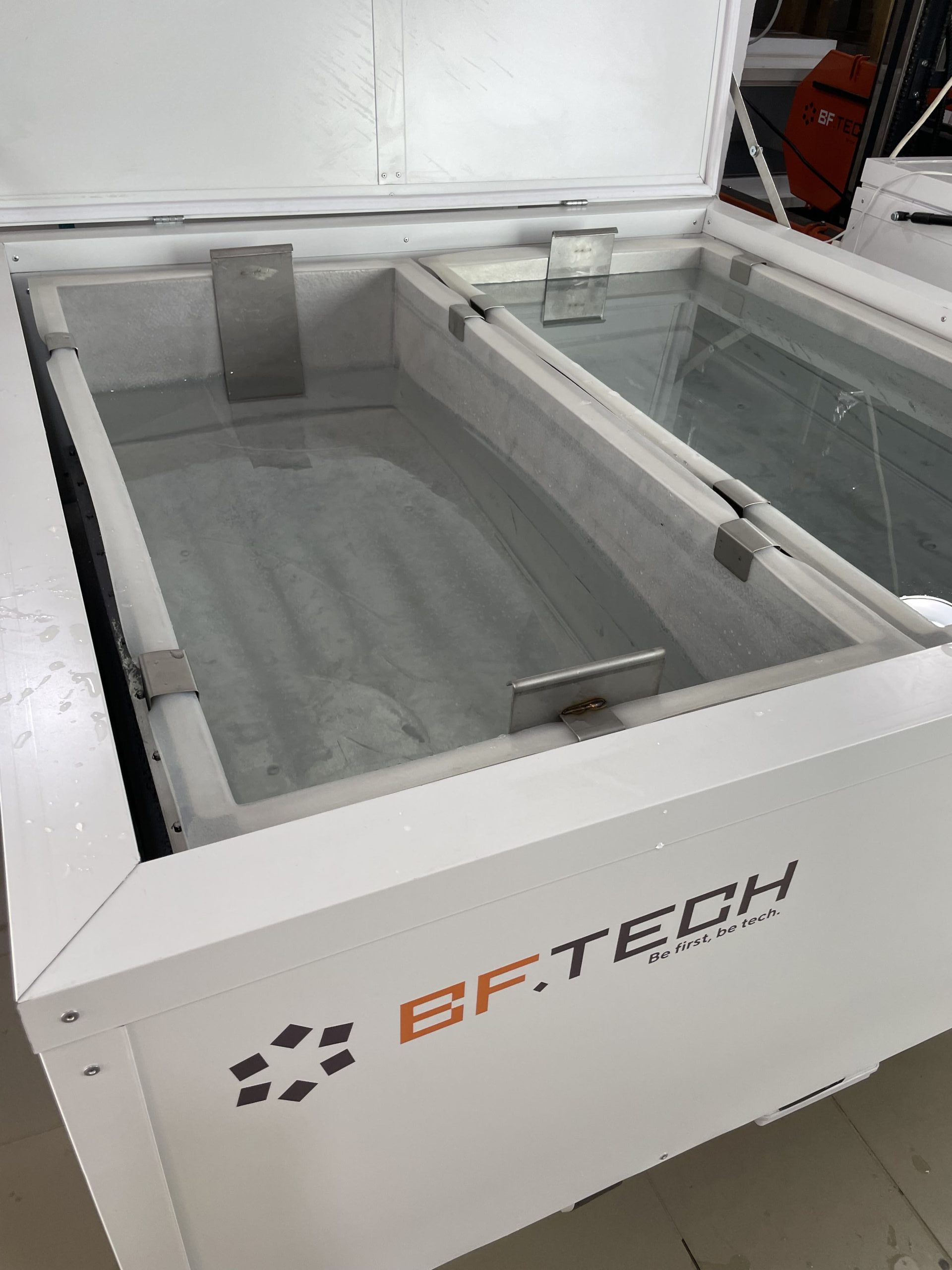
Using the right water supply for ice maker is a significant moment that will have a positive impact on the final result. That is why you need to learn everything about this before starting to make your ice.
How Water Impacts the Efficiency of Ice Block Maker Machines
Talking about ice machine operation, you need to have the clear understanding that the right type of water will make your equipment work longer. As an example, distilled water has no contaminants and it is a benefit for your ice maker. Instead, tap water or boiled water contain some minerals, which can produce scale in your ice machine. Scale can affect negatively on proper operation of your equipment. In this case you should clear and descale the machine regularly.
According to the information above, choosing the right and distilled water for an ice maker is what you absolutely need to get a tasty cool drink and long-term equipment.
Key Parameters for Choosing Water for Ice Makers
To get the perfect result of making ice cubes, be sure that you use the right type of water. Keep in mind that crystal clear water from the first point of view can have a lot of minerals, bacterias and substances in it. The main parameter for choosing water is filtered and distilled without impurities. This is the ideal material for making ice cubes.
Reverse Osmosis vs. Simple Filtration: What to Choose?
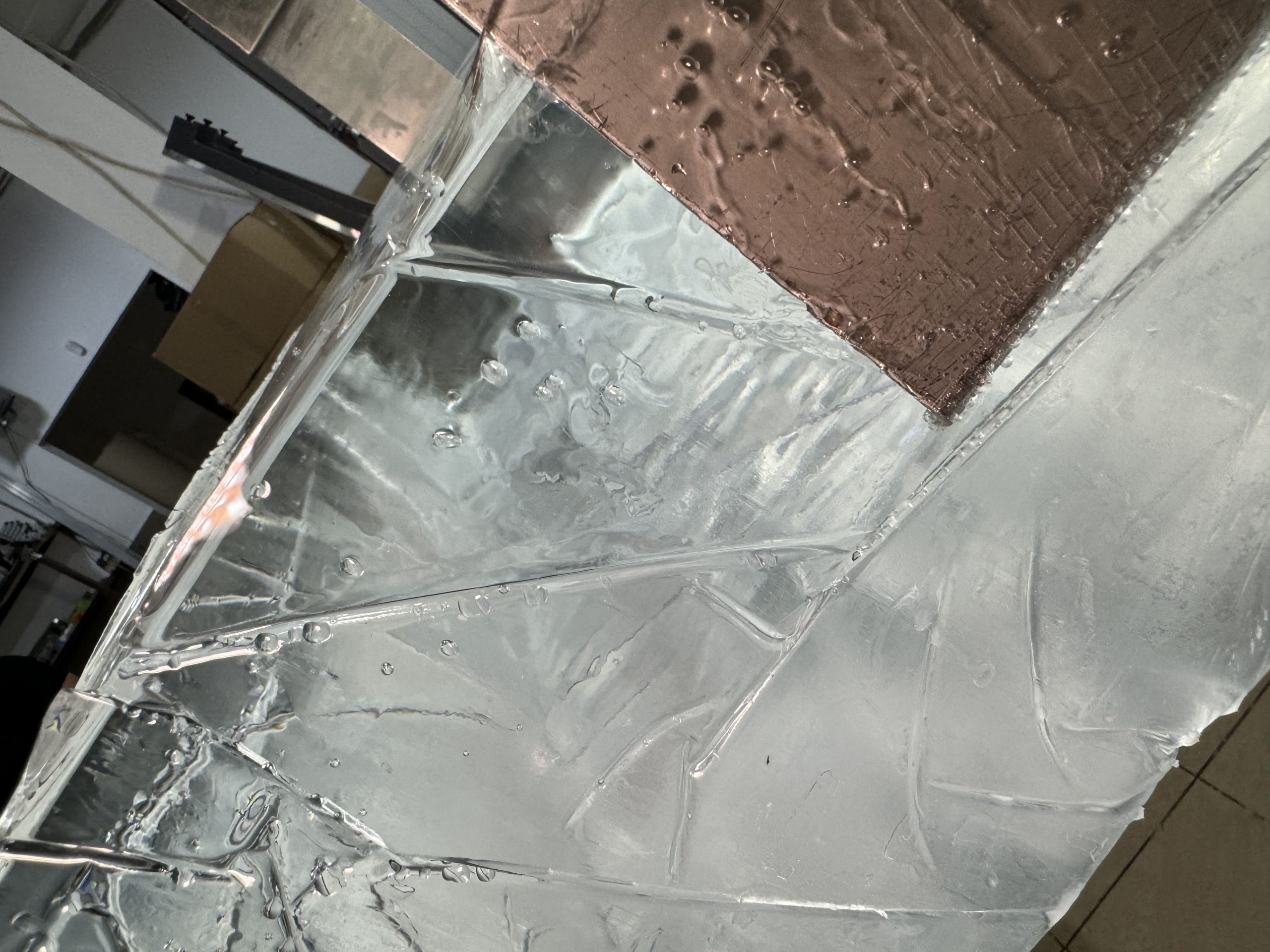
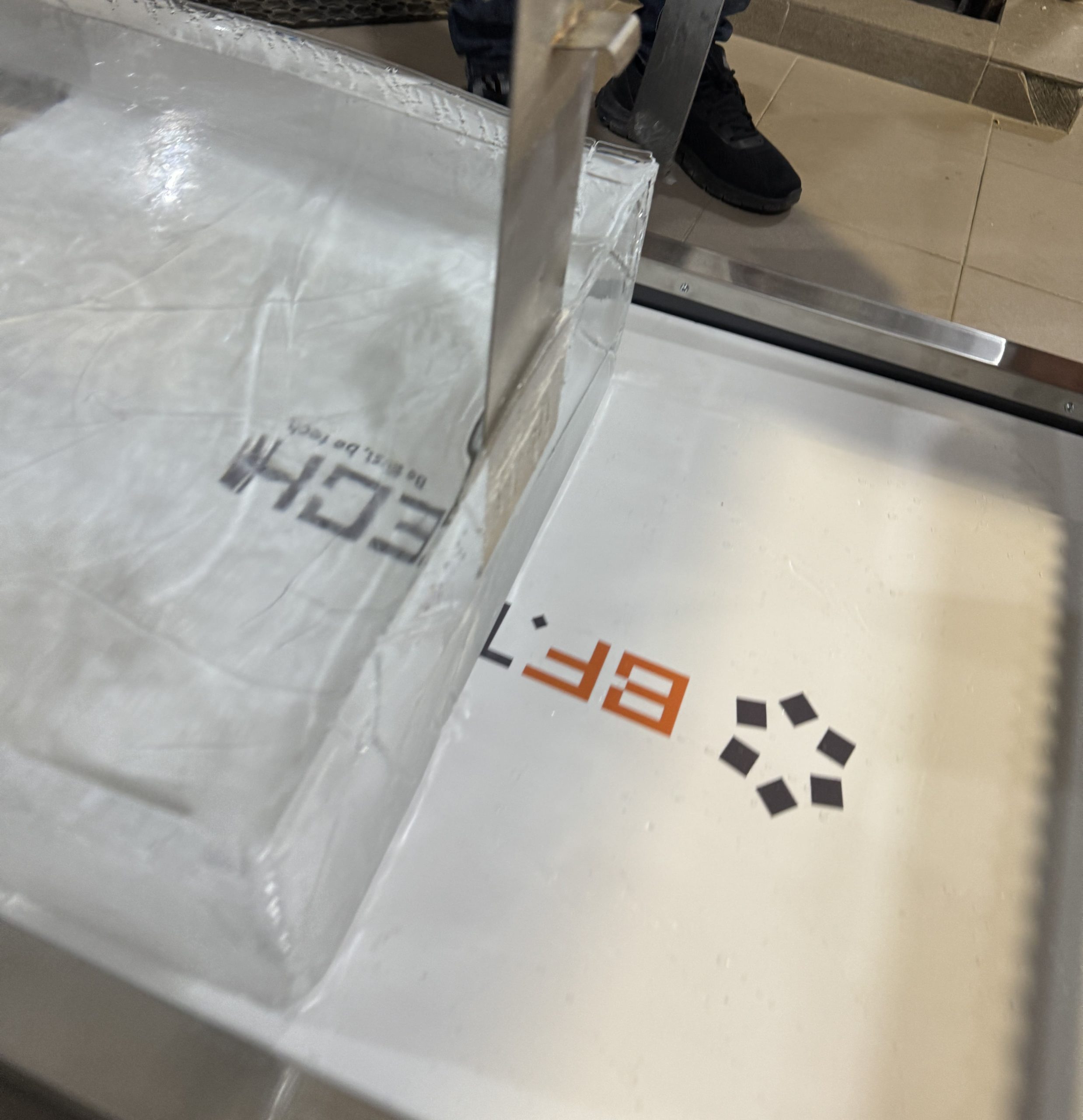
To remove water hardness while using your ice maker machine it is important to choose the right type of ice machine water filter. It will affect the final result and water quality, so be sure you find the right kitchen water filtration system before starting the process.
Benefits of Carbon Filters for Ice Makers
The main purpose of using a carbon filtration system is to reduce chlorine from water. Except this you can also remove other contaminants from water. High quality carbon filters can remove much more contaminants to get the best water for an ice maker.
The main benefits of carbon filtration are:
- water hardness;
- reduce bacterias, chlorine and a huge amount of other contaminants;
- make water tasty and suitable for the next freezing;
- reduce unpleasant odors from water.
It looks like carbon filters are one of the best ways to have access to water with no contaminants.
When to Use Reverse Osmosis Systems
Osmosis systems can remove a lot of contaminants from water, like: chlorine, fluoride, salt, sediment, arsenic, VOCs, PFAS, microplastics, heavy metals and others. But keep in mind that the reverse osmosis system doesn’t remove bacterias and viruses. In practice these systems can remove some bacterias, but they will leave in the membrane and can get into the water over time. So, you can bravely use this type of kitchen water filtration system in the case when you are sure your water absolutely has no bacterias and viruses.
This type of filtration system is also one of the most popular to make high water quality for ice makers.
Why Does Boiled Water Freeze Faster: The Mpemba Effect
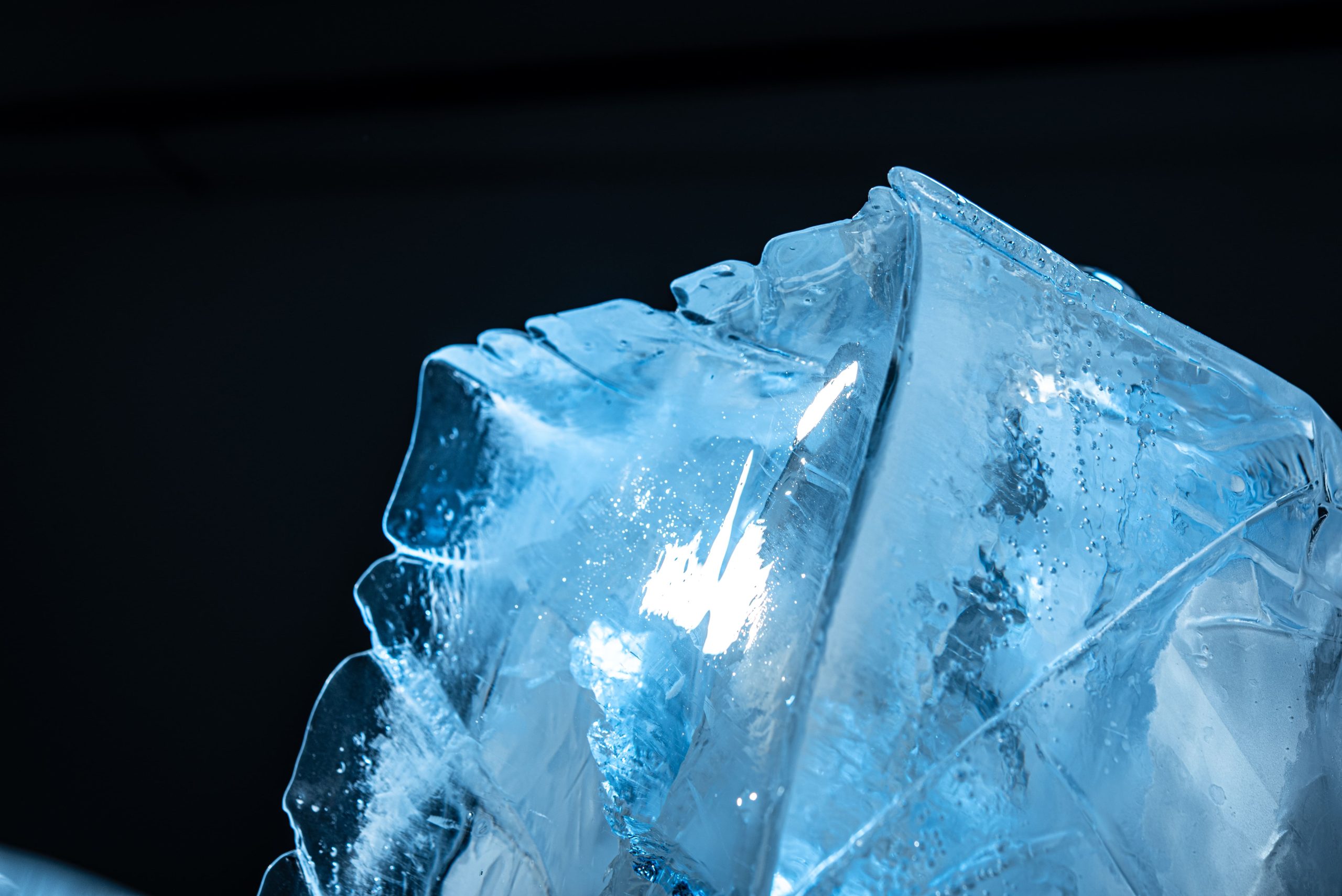
If you are about fast water freezing and quickly ice cubes creating, most likely you have heard about the Mpemba effect. So why does boiled water freeze faster? Let’s talk more about it to learn all necessary details and how they affect ice quality.
The Science of the Mpemba Effect
The question of “why does boiled water freeze faster” than cold water is explained by a physical phenomenon known as the Mpemba effect. When water is heated, several thermodynamic changes occur:
- Evaporation: Hot water evaporates quickly, slightly reducing the total volume of water that needs to be frozen.
- Dissolved Gases: Boiling aggressively expels dissolved oxygen and nitrogen from the water.
- Convection Currents: Hot water creates stronger convection currents inside the freezing mold, which accelerates the heat transfer process to the surrounding cold environment.
How Boiling Improves Ice Clarity
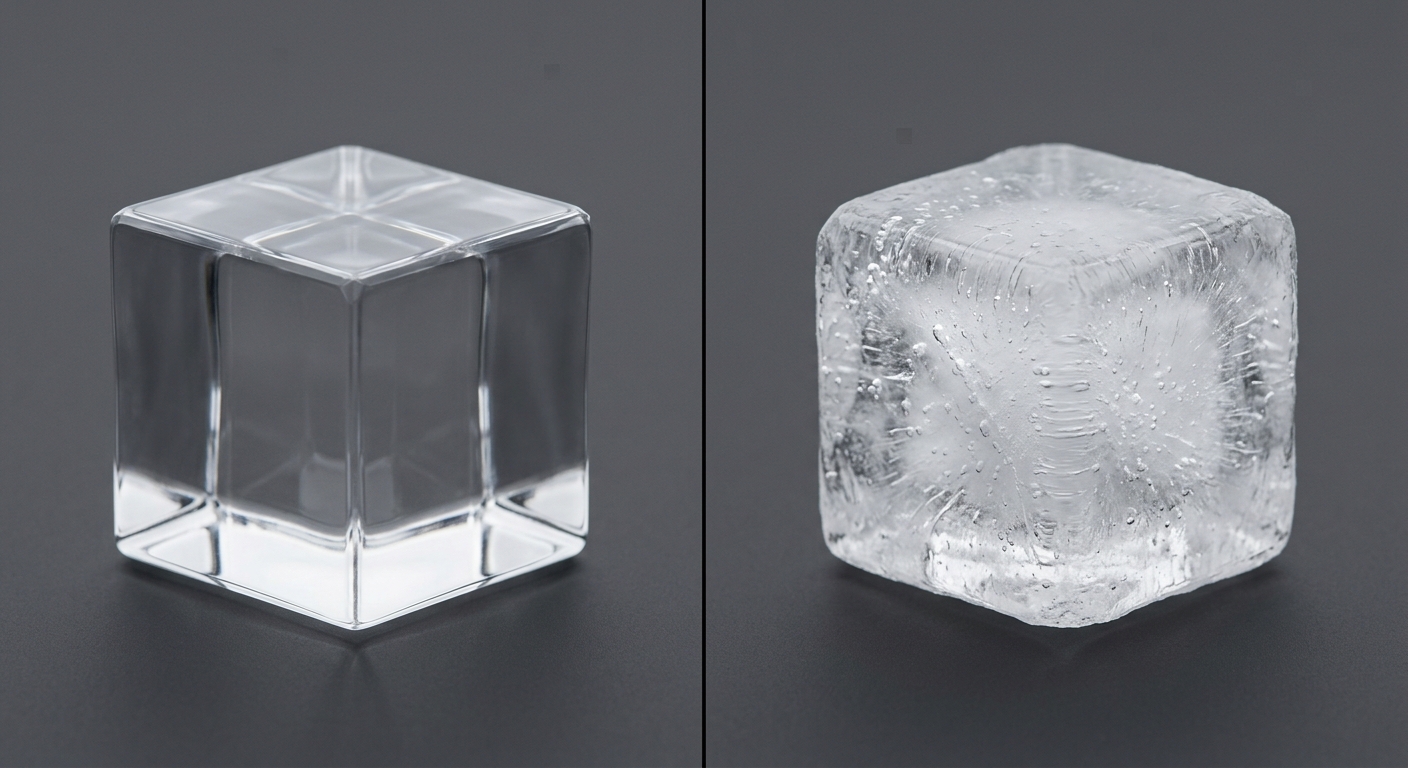
Beyond freezing speed, using boiled water significantly improves the visual quality of the ice. Because boiling removes the trapped microscopic air bubbles and dissolved gases, the resulting ice cube is much denser and more transparent than ice made from standard cold tap water. While commercial BF Tech ice makers use directional freezing to achieve this clarity automatically, using boiled water is a scientifically proven trick for home setups.
Tap, Distilled, RO, or Boiled: What is the Best Water for Ice Maker Systems?
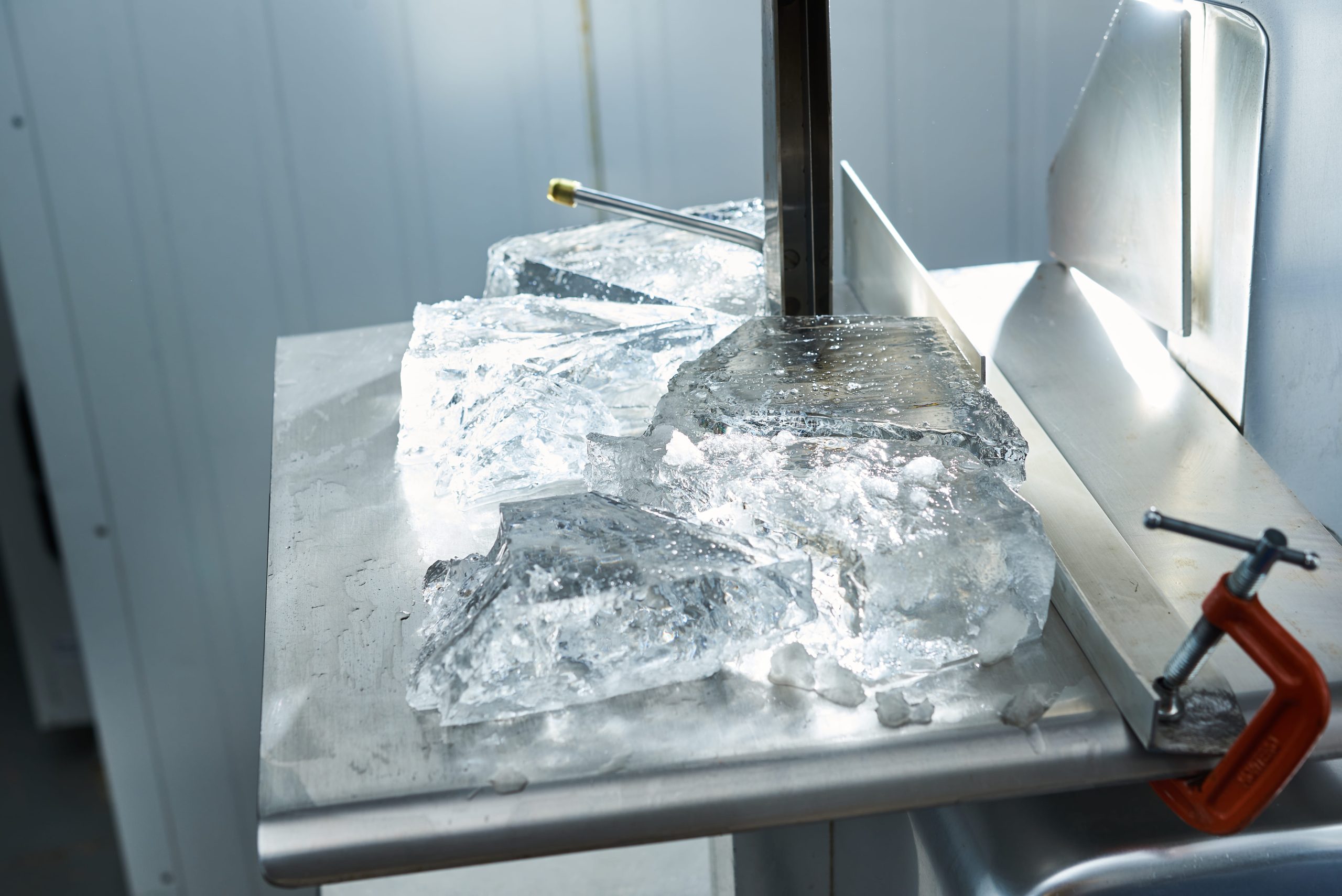
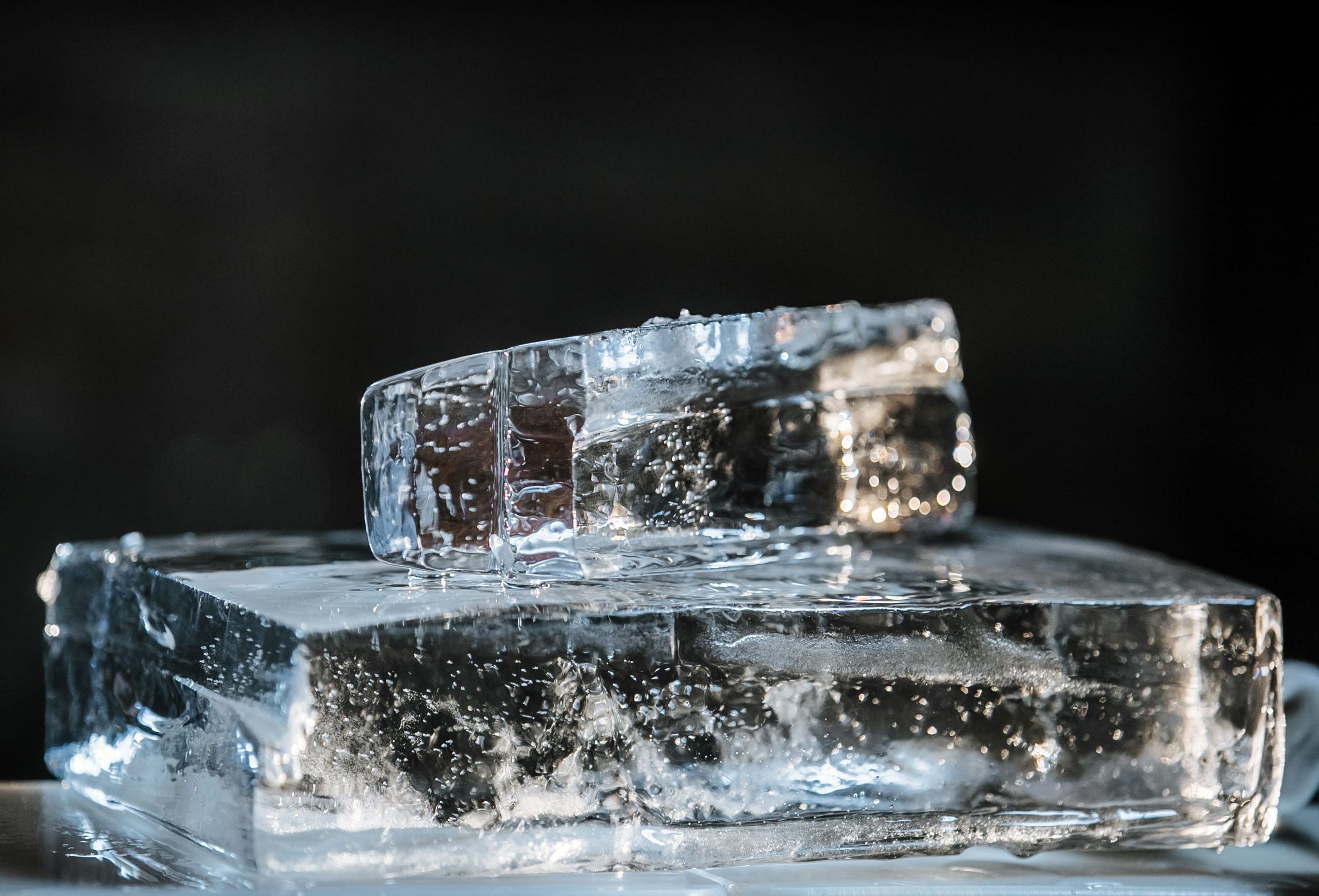
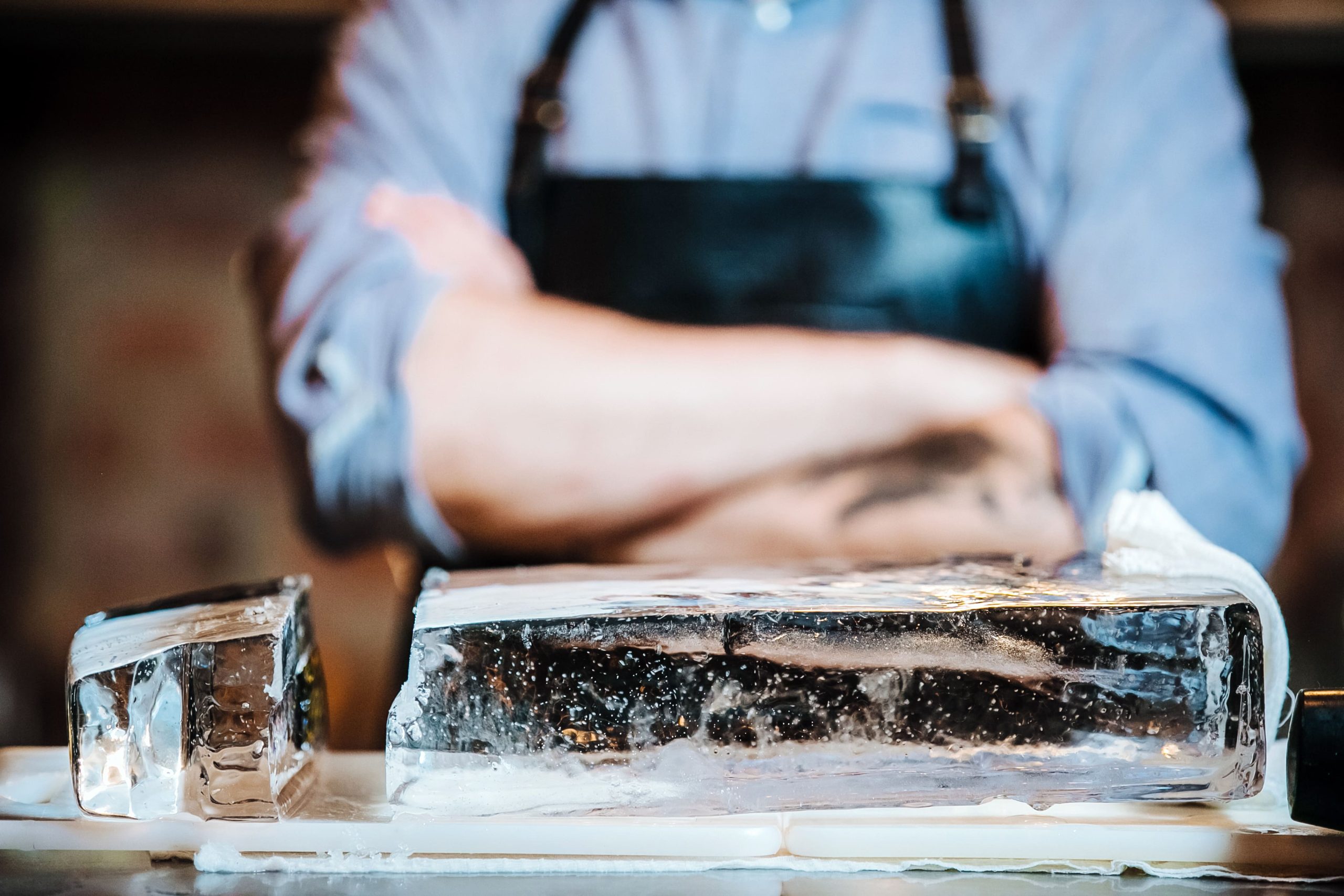
To achieve the perfect clear cube, you must evaluate the pros and cons of your water source and preparation methods:
Tap Water
Pros: Readily available and inexpensive. Some trace minerals can enhance the flavor profile of specific spirits.
Cons: Often contains chlorine, sediment, and high mineral content (hard water). This causes cloudy ice, alters the taste of delicate cocktails, and accelerates scale buildup in the machine.
Distilled Water for Ice Maker
Pros: Guarantees zero mineral scaling. Because all impurities are boiled away, the resulting ice is highly transparent.
Cons: Removes all flavor-enhancing minerals, leaving the ice tasting “flat.” Ultra-pure distilled water can sometimes be highly reactive and leach metal from internal machine components over long periods.
Boiled Water (A Home-Setup Alternative)
Pros: Boiling water expels dissolved oxygen and gases, which significantly improves ice clarity and triggers the Mpemba effect (allowing it to freeze faster).
Cons: Boiling does not remove hard minerals (like calcium). If your base water is hard, boiling it will still lead to scale buildup in your commercial ice maker over time.
Reverse Osmosis (RO) Water – The Industry Standard
RO systems force water through a semi-permeable membrane, removing 99% of dissolved solids, chlorine, and heavy metals, while often leaving just enough trace elements for a balanced taste
For professional commercial setups, Reverse Osmosis combined with carbon filtration provides the absolute best water for ice maker longevity and crystal-clear ice quality.
Keeping Your Ice Maker Efficient with Proper Water
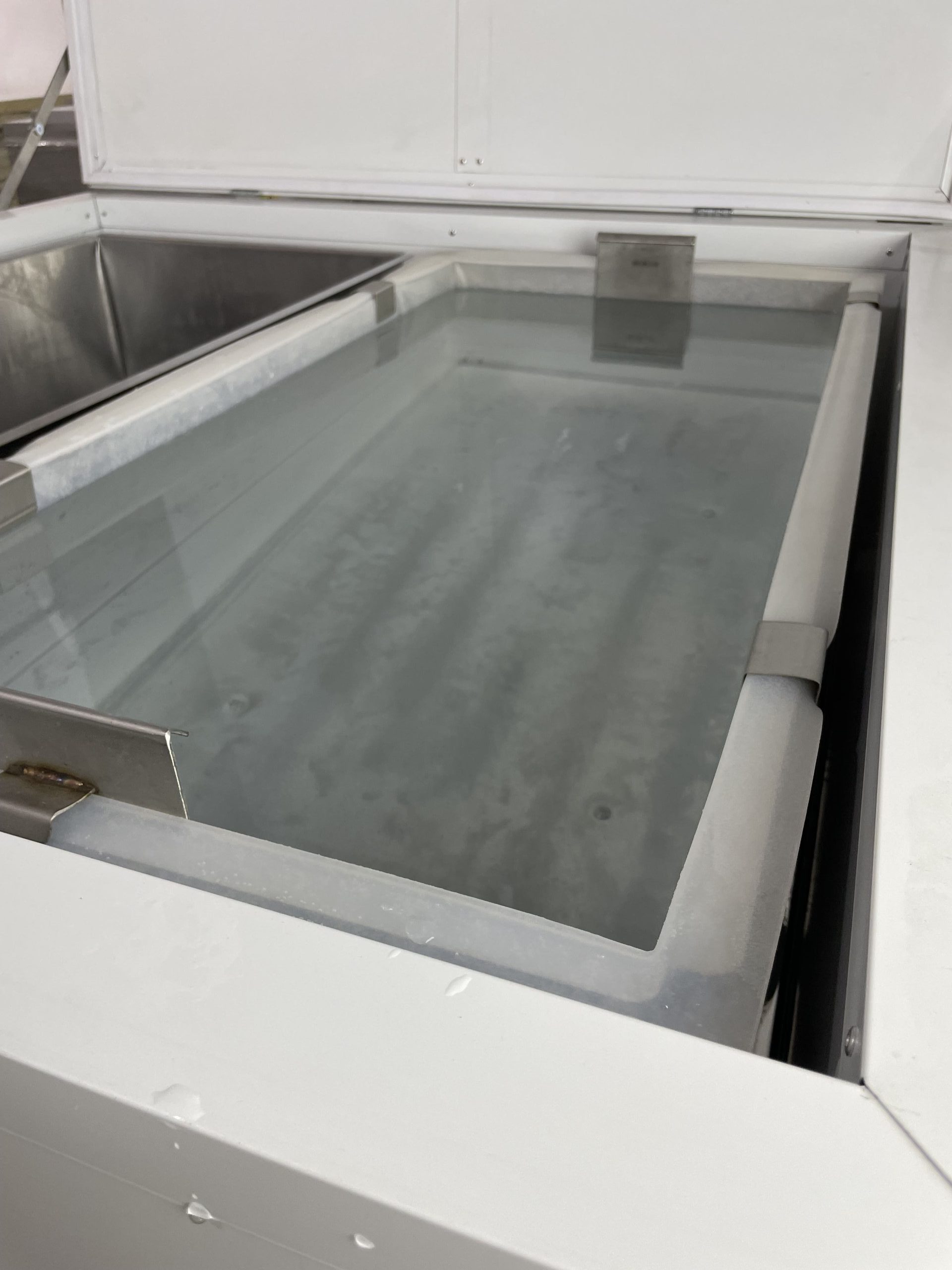
To reach the best result ever it’s not enough just to prepare the water, you also need to take care about your ice making equipment. Don’t forget about it, if you have a purpose to use the perfect ice in your drinks.
Cleaning and Descaling Your Ice Maker
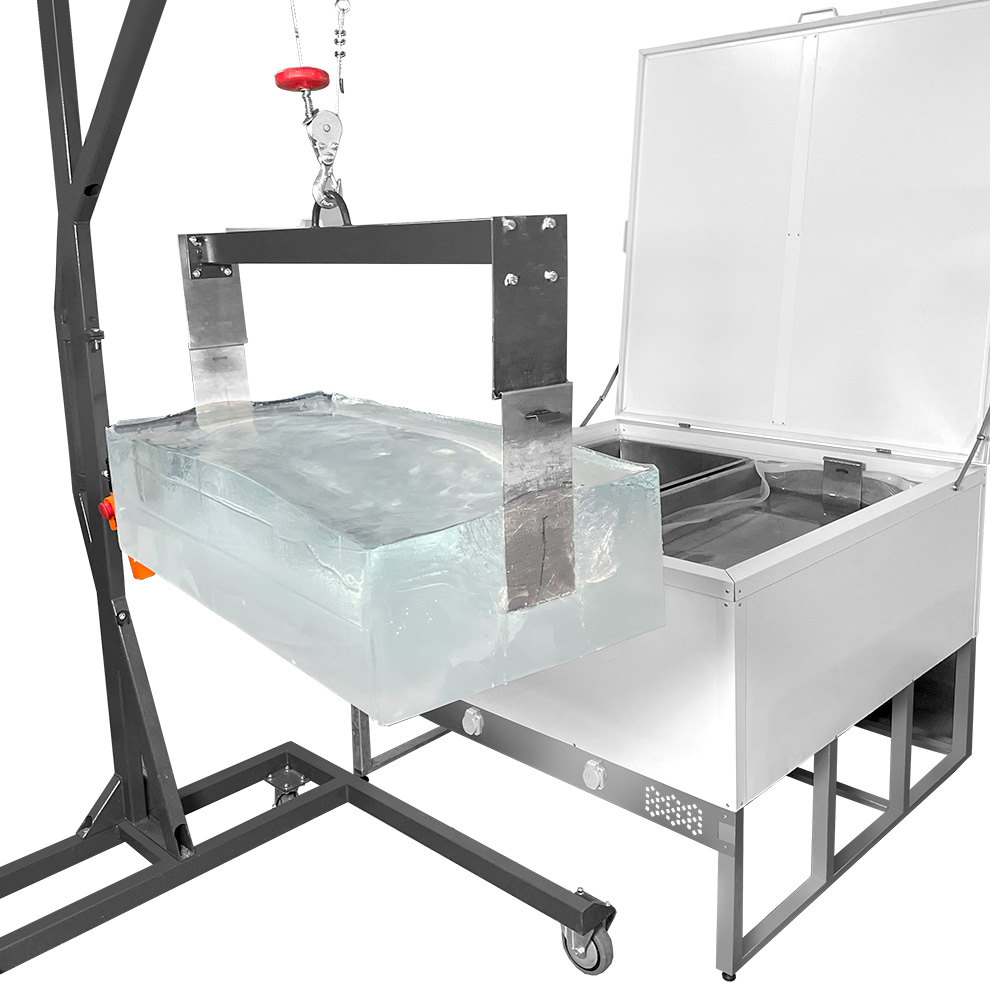
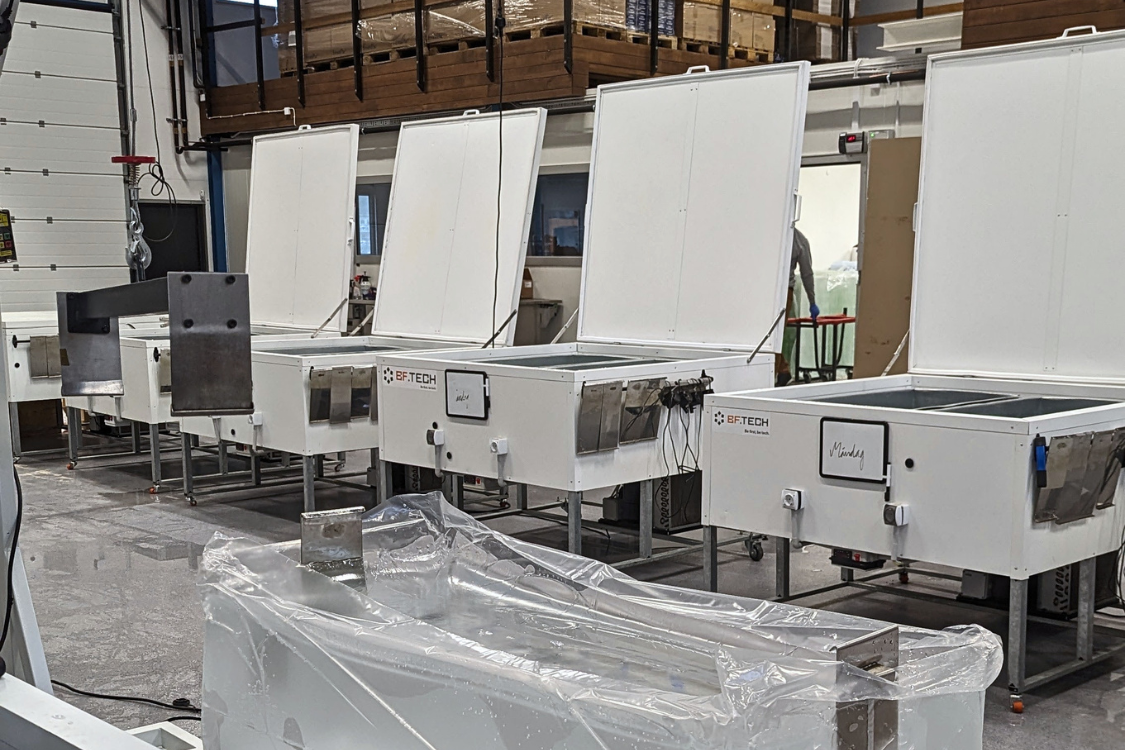
Modern stores offer a variety of different equipment models. You can buy it according to your needs and personal preferences. As an example you can use BF.TECH machines like Ice Block Maker P300 (for big ice volumes in restaurants and hotels) or Ice Block Maker P30 (compact design for small cafes or bars).
No matter how professional and quality the equipment is, keep in mind that you need to clean and descale it. It will help to produce the best ice ever.
Why Proper Water Preparation Is Key for Long-Term Efficiency
Often ice machine users have a question about what type of water to use in an ice maker. As we notice above, there are three types of water you can use for ice cubes: tap water, distilled water and boiled one. It’s absolutely true, but if we talk about long-term ice making equipment efficiency, it is worth saying that distilled water is the most suitable variant. As it has no contaminants, there will be no scale on your machine.
Also, you need to have a high-quality filtration system for all types of water and clean ice block maker with the appearance of the first signs of pollution and dirt.
Conclusion
To get aesthetic and delicious ice cubes you need to choose the right type of water quality. Prepare it with the help of a filtration system. It’s important to clean and descale your ice making machine for long-term working. Also use boiled water and Mpemba effect to get your clear ice faster.
FAQ
How does water quality affect the performance of my ice maker?
The more contaminants are in the water - the more scale you will find in your ice block maker. It can have a negative impact on equipment operation, so cleaning and descaling - must be the regular processes.
What type of water to use in ice maker for the best clear ice?
For the highest quality clear ice and optimal machine performance, the best water to use is Reverse Osmosis (RO) water paired with a carbon filter. This combination removes cloud-causing minerals and chlorine while preventing scale buildup inside the machine.
Why does boiled water freeze faster?
Boiled water freezes faster due to the Mpemba effect. Heating the water alters its hydrogen bonds, increases evaporation (reducing volume), and creates rapid convection currents that dissipate heat faster than in room-temperature water.
Is distilled water safe for ice production?
Absolutely yes! Distilled water is suitable and safe for making ice cubes, but be ready that the tasty will be unfamiliar, not like bottled water.
Do I need a water filtration system for my ice maker?
No matter what type of ice making machine you have and its product details, you need to buy an ice machine filter to use clean and treated water.



MORE ABOUT THE AUTHOR