Why Does Ice Crack in Water? The Science Explained

Have you ever poured a refreshing drink over fresh ice, only to hear a sharp snap and see a web of fractures instantly appear? This common phenomenon is a fascinating thermodynamic event known as thermal shock, driven by differential thermal expansion. Understanding why ice cracks in water comes down to the sudden, uneven temperature changes that occur the exact moment liquid meets solid.
The Real Reason Why Ice Cracks When You Put It in Water

To understand exactly why ice cracks when you put it in water, we have to look closely at what happens to the ice at a molecular level.
1. The Crystalline Structure of Ice
When water freezes, it expands and forms a rigid, highly organized hexagonal crystalline lattice. This structure locks the water molecules into place. Because ice is a relatively poor conductor of heat, it cannot redistribute sudden temperature changes evenly or quickly throughout its entire volume.
2. Differential Thermal Expansion
When you submerge an ice cube in a liquid, the outside of the ice cube warms up rapidly and attempts to expand. However, because ice conducts heat slowly, the cube’s deep interior remains cold and retains its original size. This creates an intense tug-of-war inside the cube—a phenomenon called differential thermal expansion. The expanding outer layer pulls against the rigid, unyielding core until the mechanical stress exceeds the structural strength of the crystal lattice. The result? A sudden, audible fracture.
What Is Thermal Shock and Why Does It Matter for Ice?
In physics, thermal shock occurs when a thermal gradient causes different parts of an object to expand by different amounts. This is precisely why do ice cubes crack in water. The steep temperature gradient between the liquid and the ice core creates massive internal stress. If the ice cannot relieve this stress smoothly, it snaps, which explains why does ice crack when put in water so violently at times.
Why Does Ice Crack in Hot Water vs. Cold Water?

The intensity of thermal shock depends entirely on the temperature gap between the ice and the liquid.
- Why does ice crack in hot water: When dropped into hot liquid, the temperature gradient is extreme. The outer shell expands almost instantly while the core stays frozen, causing immediate, dramatic shattering.
- Why does ice crack in cold water: If you wonder why does ice crack in cold water, the mechanics are identical, but the process is slower. Even chilled or room-temperature water is significantly warmer than ice straight from a deep freezer. The temperature delta is still wide enough to cause differential expansion, though the cracks might be fewer or quieter.
Ultimately, whether the liquid is warm or cool, the fundamental reason why does my ice crack when i put it in water remains the sudden thermal gradient.
Does the Type of Ice Matter? Clear Ice vs. Regular Ice Cubes

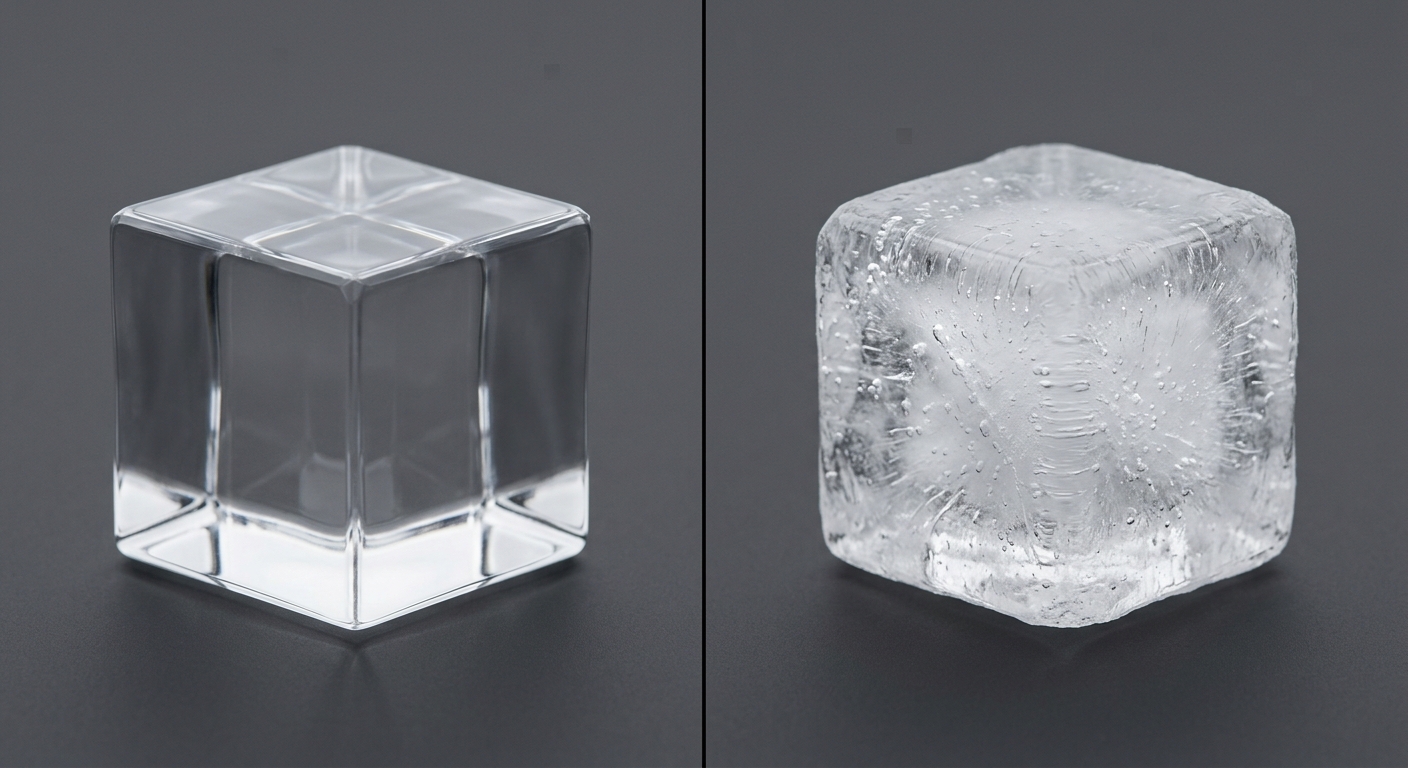
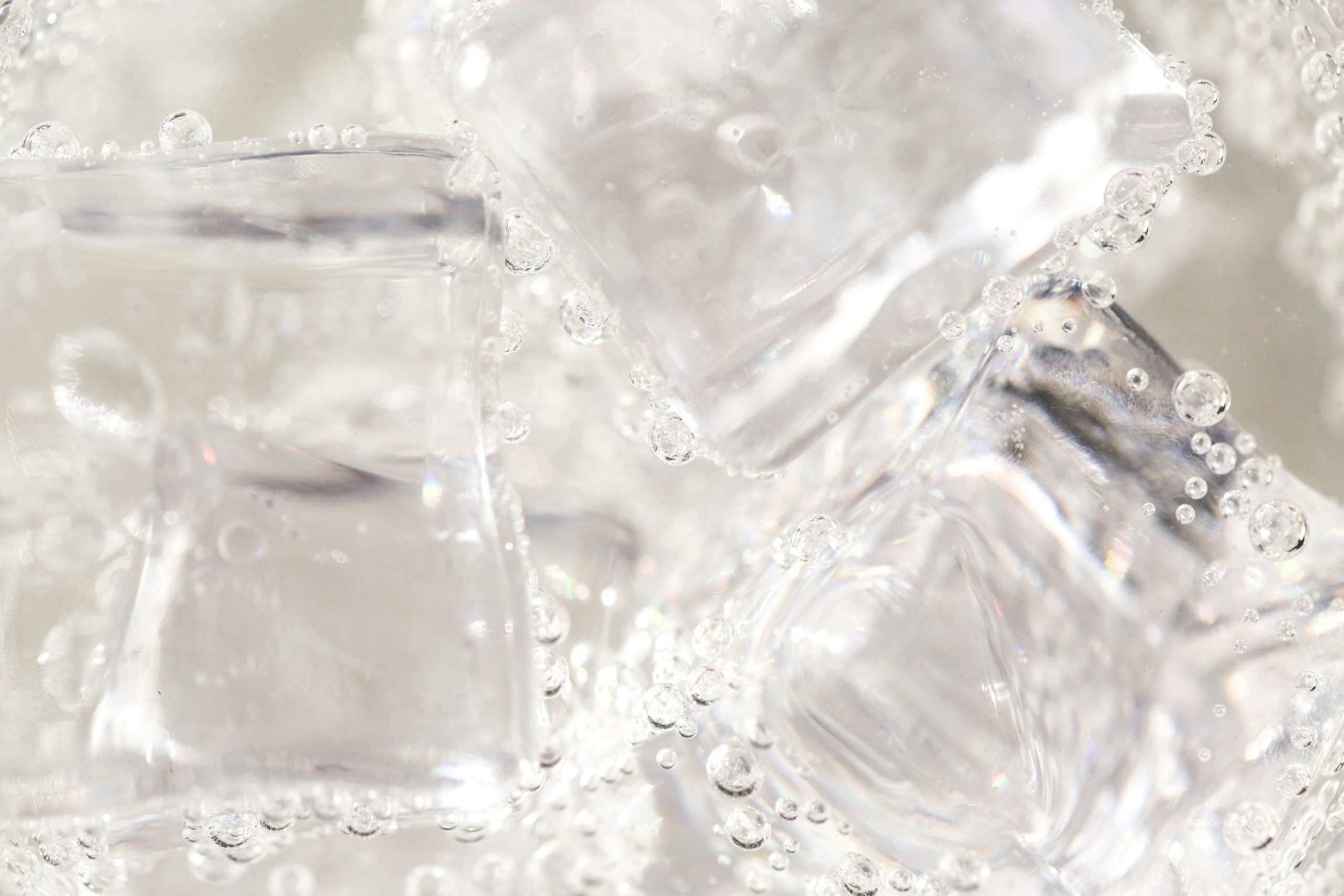
The internal purity of your ice plays a massive role in how it handles thermal shock. Traditional cloudy ice cubes are packed with trapped air bubbles and microscopic impurities. These imperfections actually act as tiny structural flaws where cracks can easily initiate.
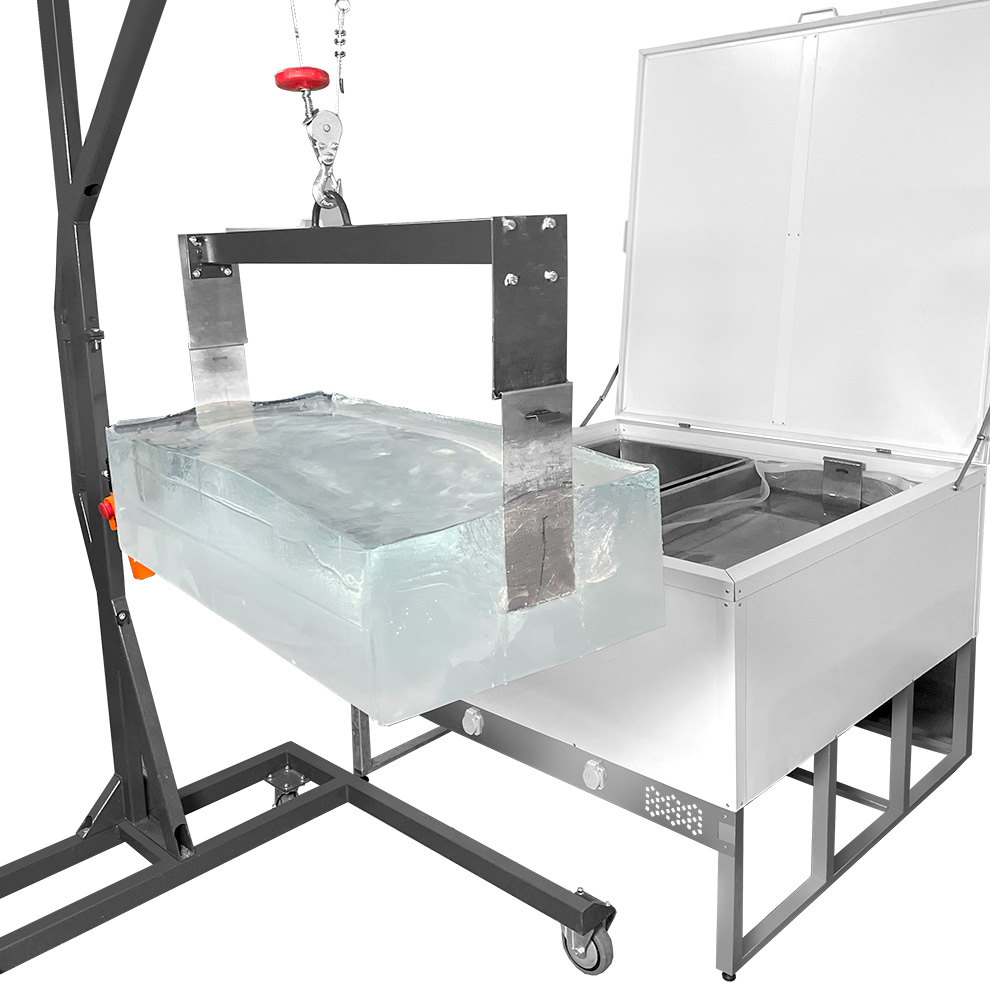
Conversely, high-quality craft ice is structurally different. If you use a premium machine or directional freezing, you get perfectly transparent ice. However, because it is so dense and structurally continuous, the internal stress has nowhere to escape. This is why does your clear ice crack so easily if it isn’t handled correctly.
How to Prevent Ice from Cracking in Your Drink

If you want to serve pristine, flawless drinks without the unsightly fractures, you can easily minimize thermal shock with a few professional bartending techniques:
- Tempering your ice: Never use ice immediately after taking it out of a sub-zero freezer. Let your ice cubes sit at room temperature for 2 to 5 minutes until they sweat and look wet. This raises the outer temperature gently and eliminates the drastic thermal gradient.
- Pour the liquid slowly: Instead of splashing it directly onto the ice, pour it gently down the side of the glass to slow heat transfer.
- Use larger ice shapes: Larger ice spheres or large cubes have a lower surface-area-to-volume ratio, meaning they absorb heat much more evenly than small cubes. This is crucial to understand if you want to know how a luxury ice ball can crack and how to prevent that.
- Utilize heavy ice tools: To craft flawless, structurally sound spheres that resist shattering, professional bartenders rely on premium tools like an Aluminum Ice Ball Press. A heavy-duty press uses ambient thermal mass to shape perfectly dense, clear spheres that melt incredibly slowly and evenly.
FAQ
Why does my ice crack when I put it in water?
It cracks due to thermal shock. The warmer water causes the outer layer of the ice cube to warm up and expand faster than the cold interior, creating internal stress that fractures the ice.
Does ice crack more in hot water or cold water?
Ice cracks much more severely in hot water. The larger the temperature difference between the ice and the liquid, the greater the thermal shock and the more violent the cracking will be.
Why does clear ice crack more than regular ice?
Clear ice is highly dense and lacks the tiny air pockets found in cloudy ice. Without these microscopic pockets to absorb internal stress, the expanding force travels through the entire crystal lattice, causing distinct, visible cracks.
What is the connection between ice thickness and its tendency to crack in water?
Thicker ice has a larger core insulated from the outside temperature. This creates a much steeper thermal gradient between the warm surface and the deep, freezing core, making thick, untempered ice highly susceptible to cracking compared to thin ice.



MORE ABOUT THE AUTHOR