What Is Directional Freezing and Why It’s the Secret Behind Crystal Clear Ice
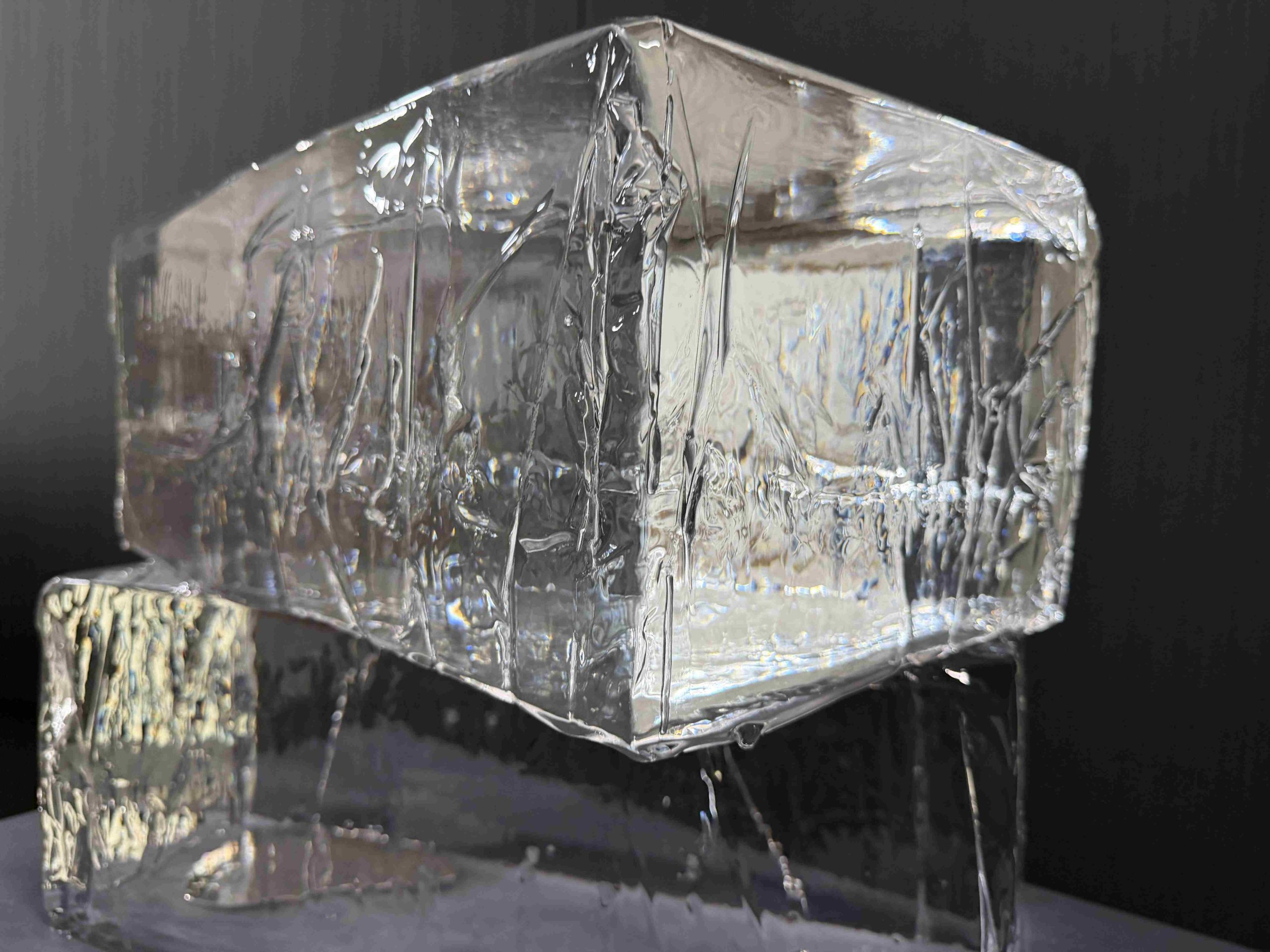
Most people have never thought about why the ice from their home freezer looks white and cloudy. It just does — and they accept it. But if you’ve ever seen a perfectly transparent ice cube in a high-end cocktail bar and wondered how it got that way, there’s one answer to that question: directional freezing.
This isn’t a marketing term or a trend. It’s a physical process — one that determines the structure of every ice cube before it’s even formed. Understanding it changes the way you think about ice entirely.
What Is Directional Freezing?
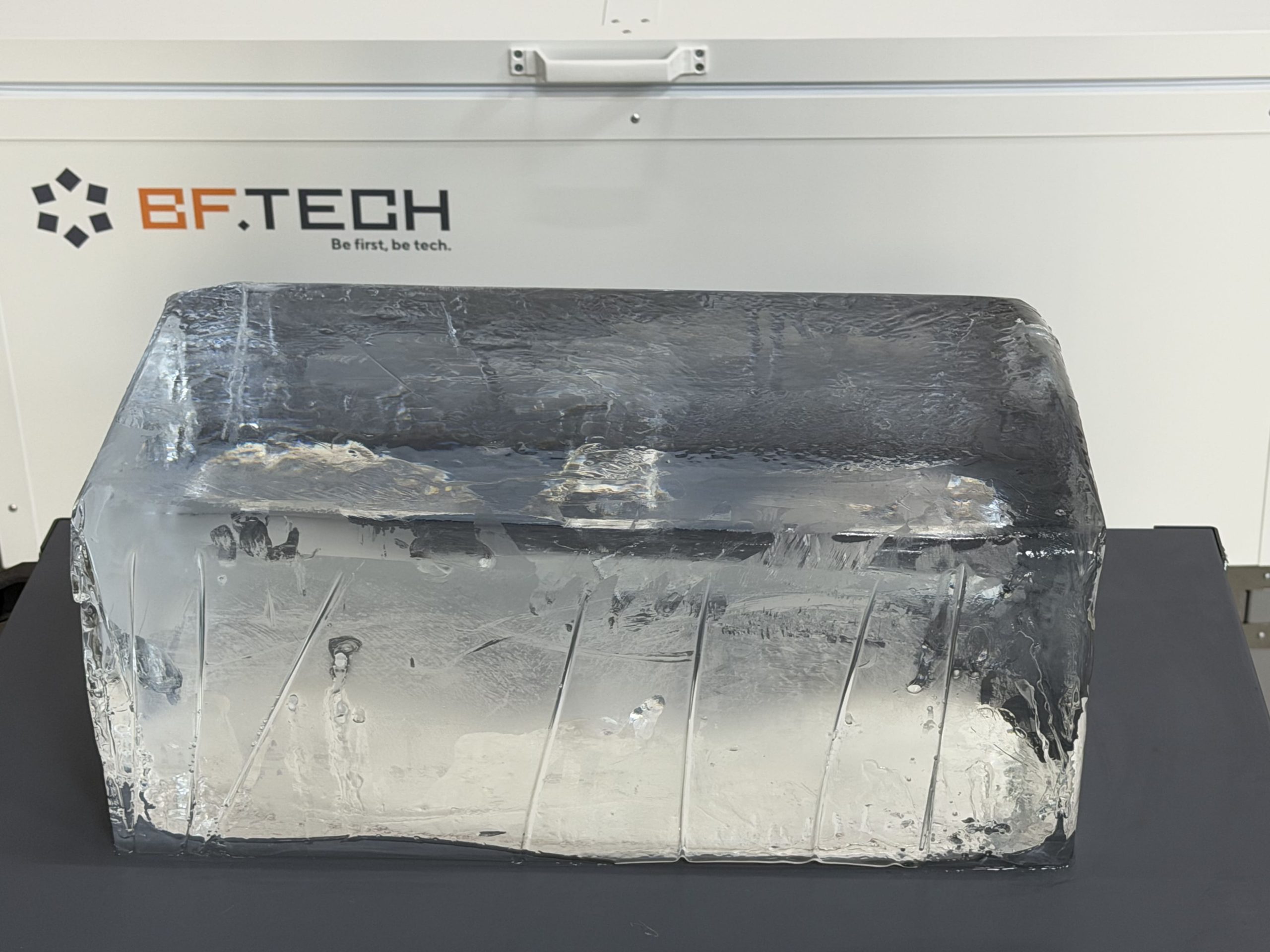
Directional freezing is a controlled freezing process in which water solidifies progressively from one direction — typically from the top down — rather than freezing from all sides simultaneously.
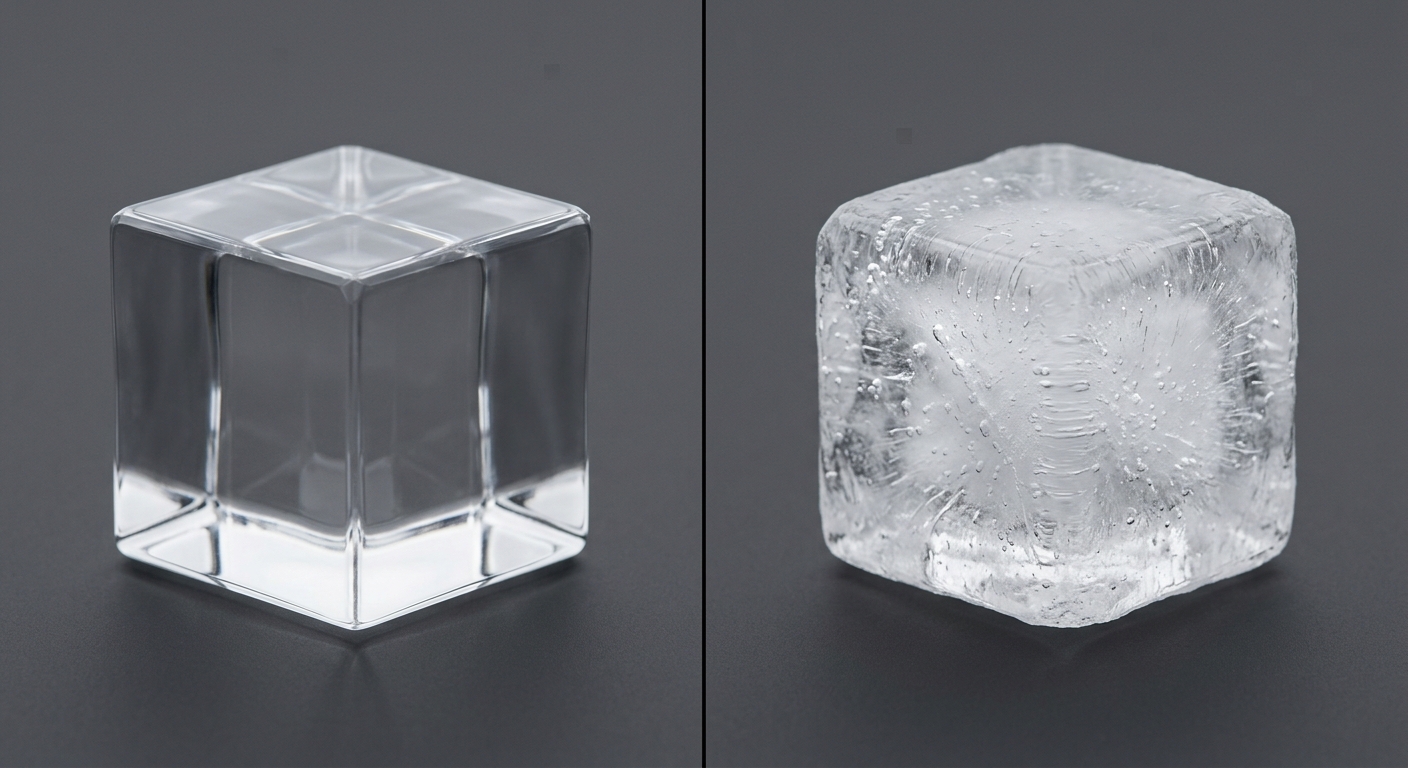
In a standard home freezer, a tray of water loses heat from every exposed surface at once. Ice crystals form at the edges, the bottom, and the top simultaneously, trapping dissolved gases and minerals at the centre as the water solidifies inward. The result is that characteristic white, cloudy core you see in every domestic ice cube.
Directional freezing eliminates this problem by ensuring that solidification travels in a single, controlled direction. Dissolved air and impurities are continuously pushed ahead of the freezing front and expelled before they can become trapped in the ice structure. What remains is optically clear, dense, and structurally uniform.
How Does Directional Freezing Work? The Science Explained
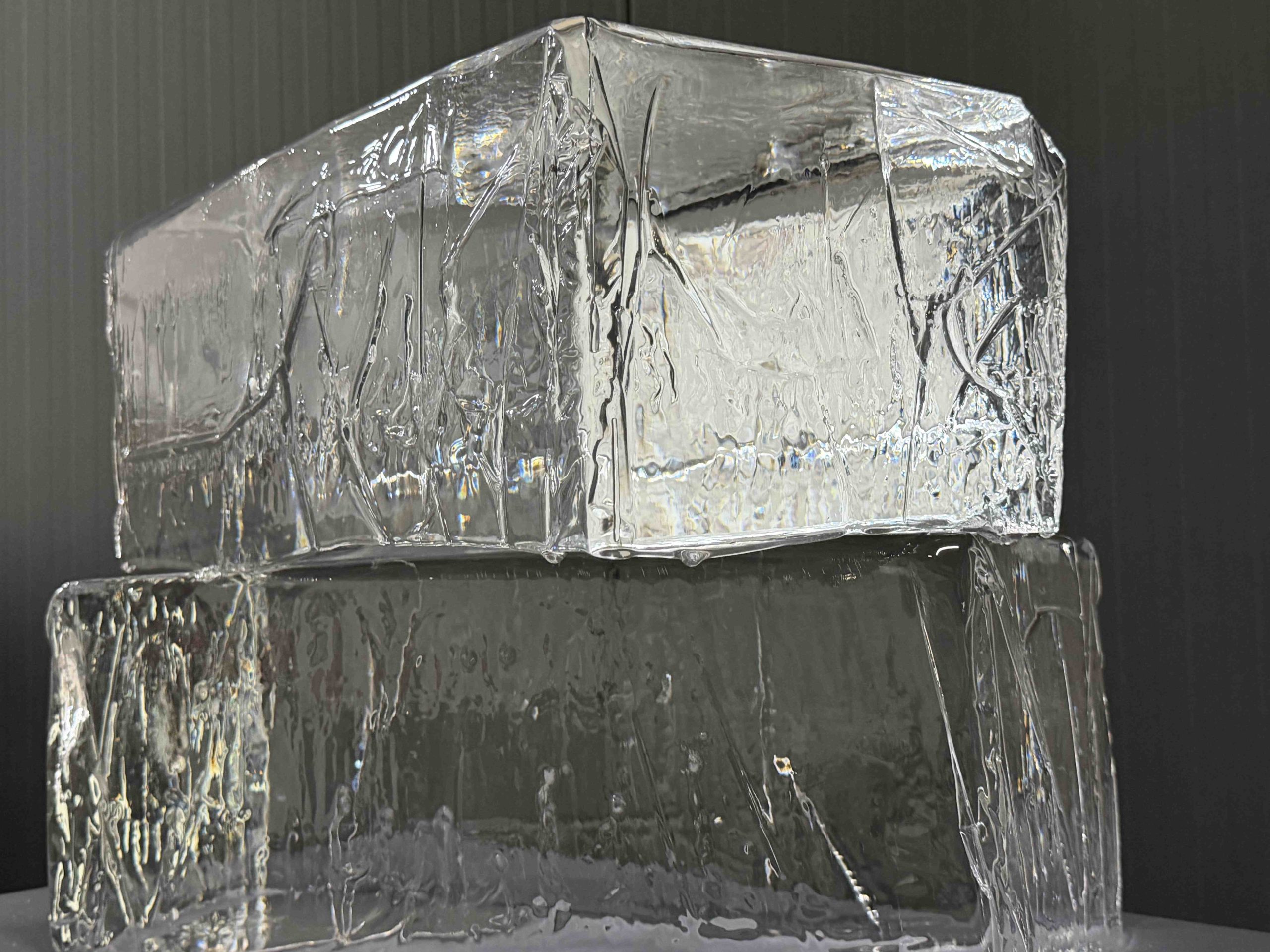
To understand how directional freezing works, it helps to think about what actually makes ice cloudy in the first place.
Water naturally contains dissolved oxygen, carbon dioxide, and various minerals. As the freezing process begins, ice crystals form a lattice that cannot incorporate these substances — they are rejected and pushed into the remaining liquid water. In conventional freezing, the water solidifies from all sides, so these impurities have nowhere to go. They become trapped as microscopic bubbles and particles, scattering light and producing the familiar milky appearance.
Directional freezing changes this dynamic entirely. By controlling the phase transition so that ice forms from one end only — and insulating all other surfaces — the dissolved gases and minerals are continuously displaced into the liquid zone ahead of the freezing front. By the time the entire block is solid, the impurities have been pushed to one end, which can simply be removed. The remaining ice is structurally flawless.
This is not complicated physics, but it requires precise control of temperature gradients, insulation, and the geometry of the freezing chamber. Get it right, and you get crystal clear ice every time.
Why Does Clear Ice Matter? (Not Just Aesthetics)

There’s a common misconception that crystal clear ice is purely a visual choice — something for Instagram and upscale cocktail menus. In reality, the difference between clear and cloudy ice is physical, not cosmetic.
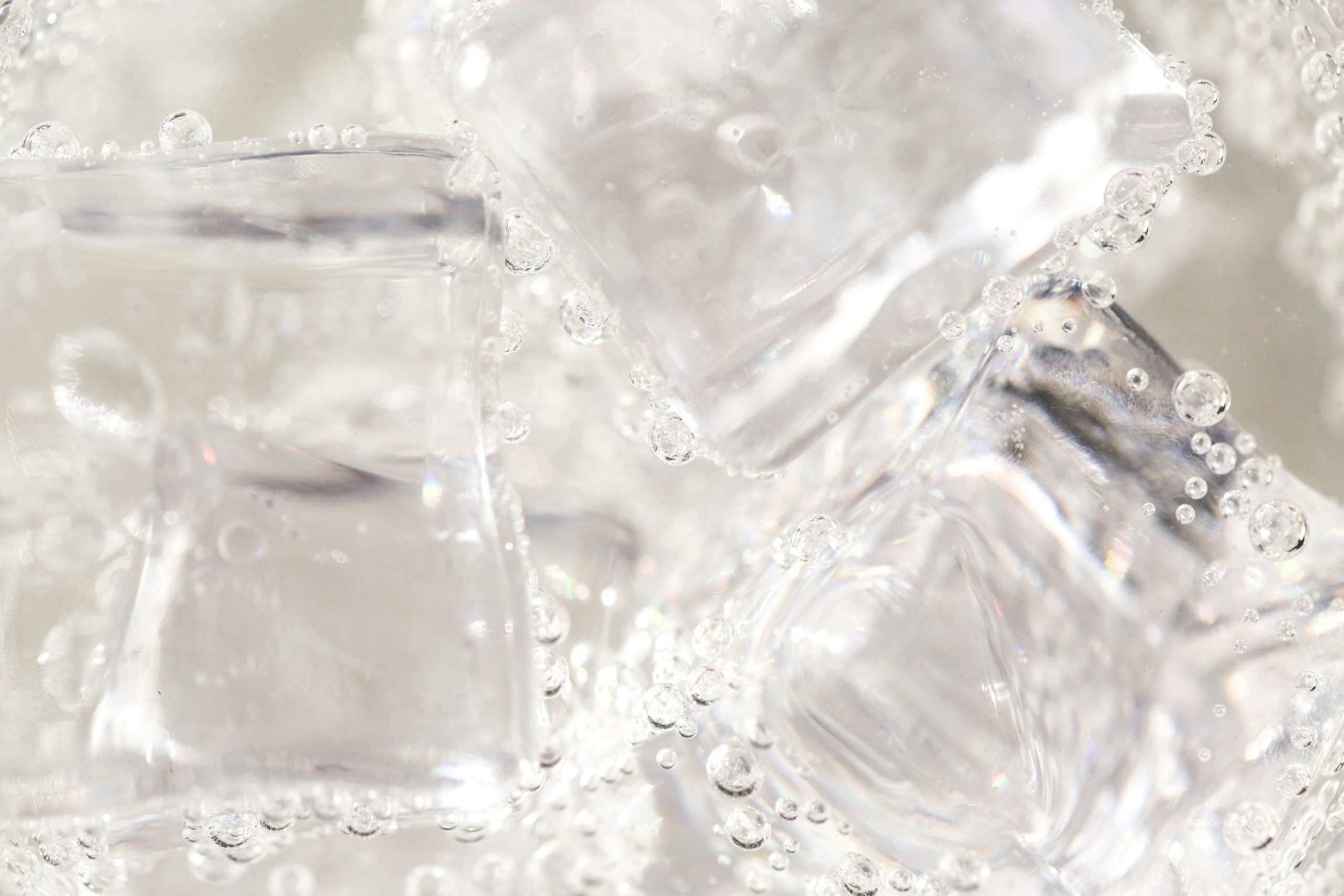
Melting rate. Cloudy ice is full of air bubbles. These bubbles interrupt the solid structure of the ice, increasing its effective surface area and accelerating heat exchange with the surrounding liquid. Clear ice, produced through directional freezing, has no such voids. It is denser and melts significantly more slowly — which means less dilution in your drink.
Purity as a signal. Clarity in ice is a direct indicator of purity. A cloudy ice cube contains everything the water contained — dissolved gases, chlorine residuals, mineral deposits. A transparent cube does not. This is why premium cocktail bars, luxury hotels, and professional catering operations have moved to crystal clear ice as a standard: it’s not about appearance, it’s about what the ice tells you about what’s inside it.
For businesses operating in the premium segment, the switch from standard to clear ice is also a competitive signal. Guests notice it. Bartenders work with it differently. And once the standard is set, going back isn’t really an option.
The Directional Freezing Clear Ice Cooler Method (For Home Use)
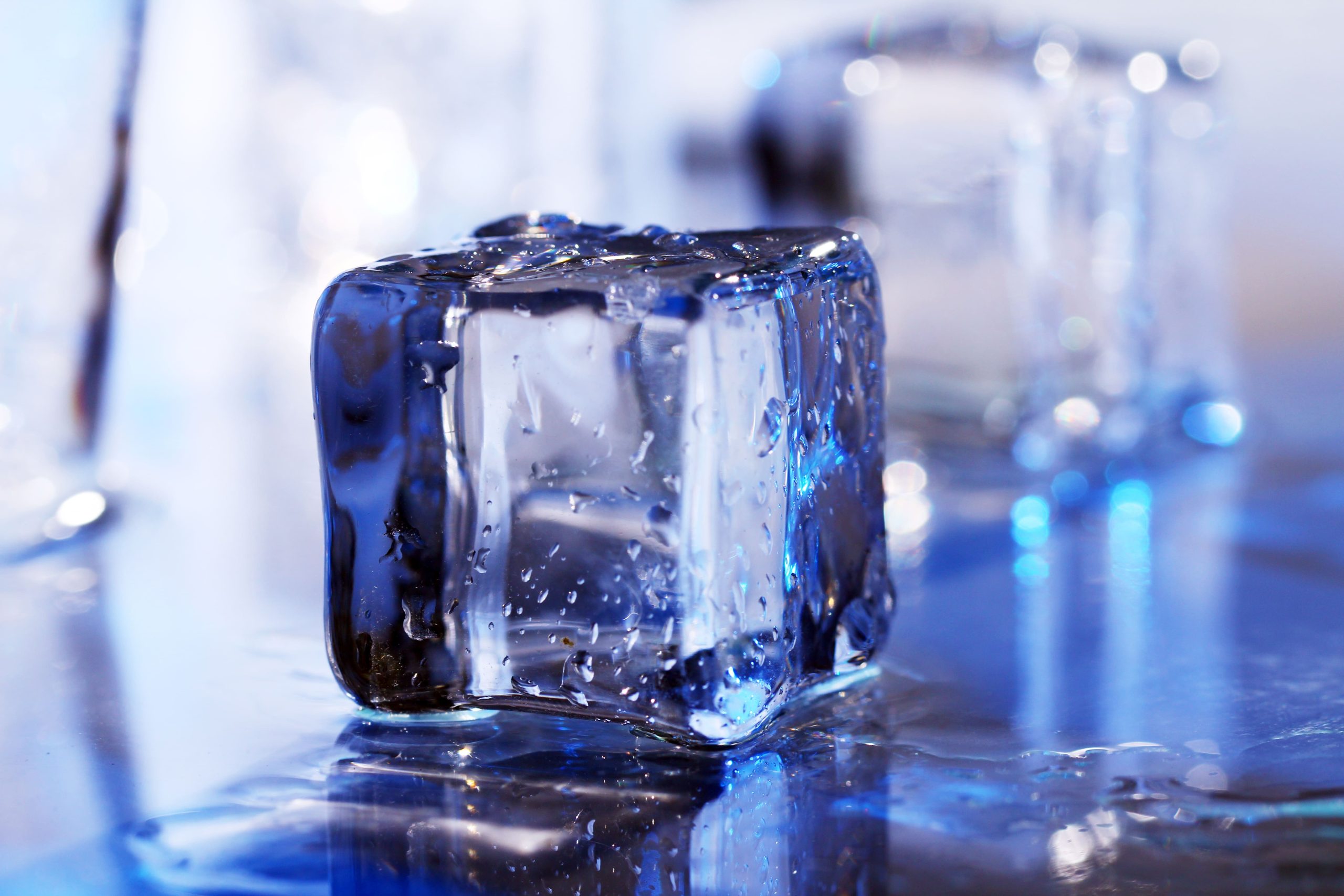
The simplest way to demonstrate directional freezing at home is to use a standard insulated container — a camping cooler or insulated box — with the lid removed. You fill it with filtered water and place it in the freezer without covering the top.
Because the insulated walls and base block heat transfer from the sides and bottom, the water loses heat primarily through its open top surface. Ice begins to form there and grows downward — a natural top-down directional freeze. Dissolved air and the cloudy portion migrate toward the bottom, where the last water to freeze remains. You cut that section away and keep the clear block above it.
The method works. It produces noticeably clearer ice than any conventional tray and is a useful illustration of the principle. But it has real limitations: the volumes are small, the results vary depending on the cooler geometry and freezer temperature, and the process cannot be reliably scaled. One cooler, one block, one cycle — that’s the ceiling.
From DIY to Professional: Scaling Directional Freezing
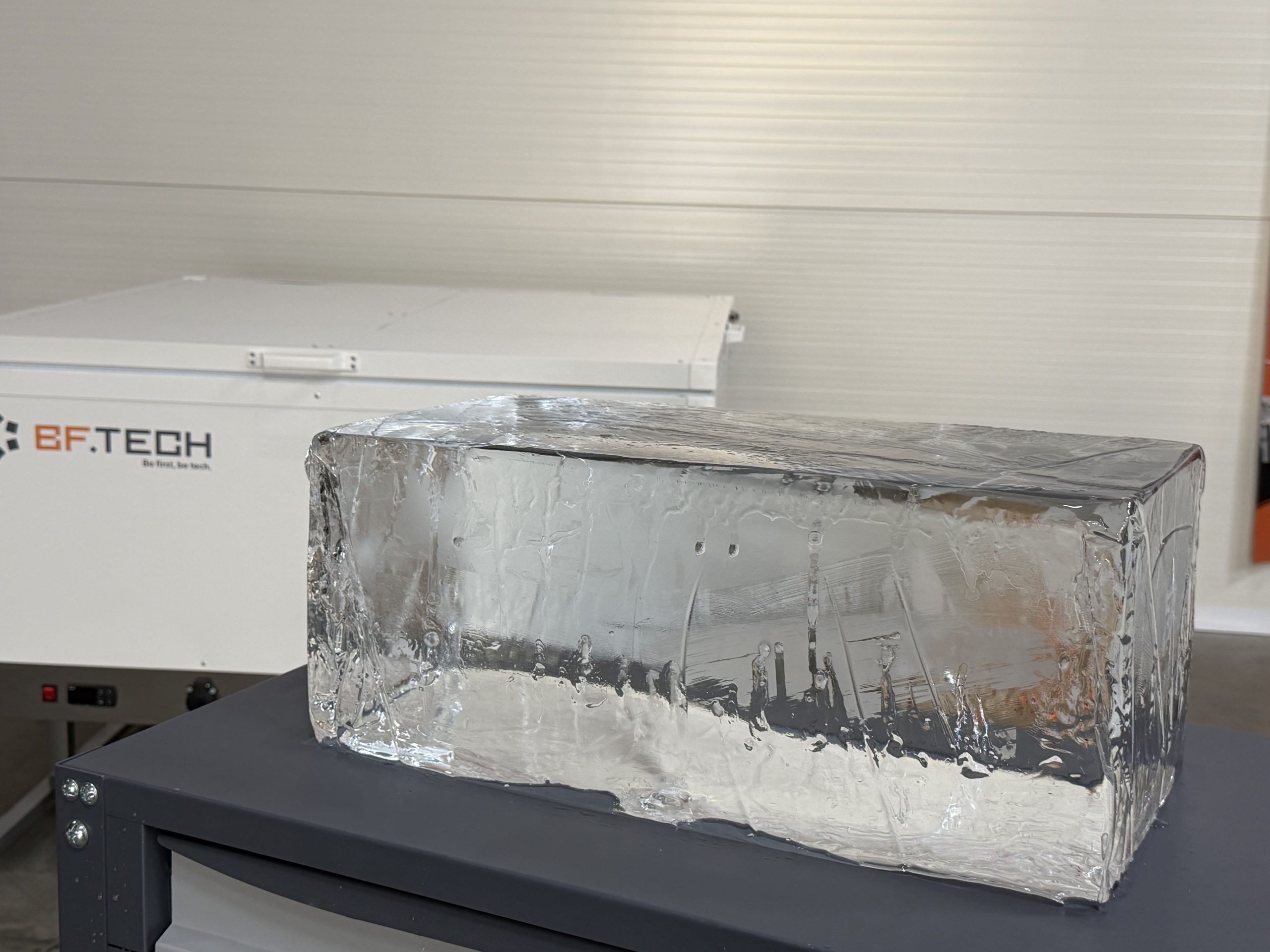
The cooler method is valuable precisely because it makes the principle tangible. But it also reveals its own limitations. When a bar needs fifty kilograms of clear ice per night, or a catering operation requires consistent blocks for an event serving hundreds of guests, the physics of a camping cooler simply don’t apply.
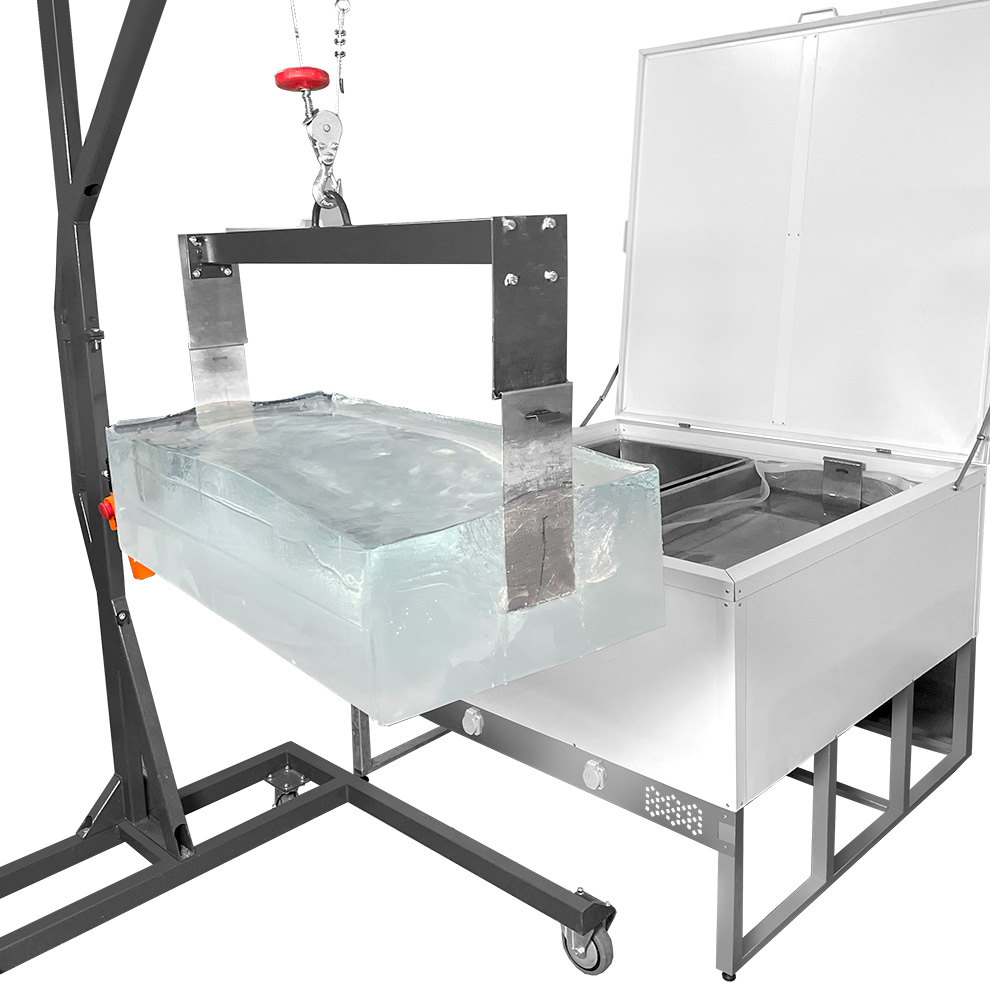
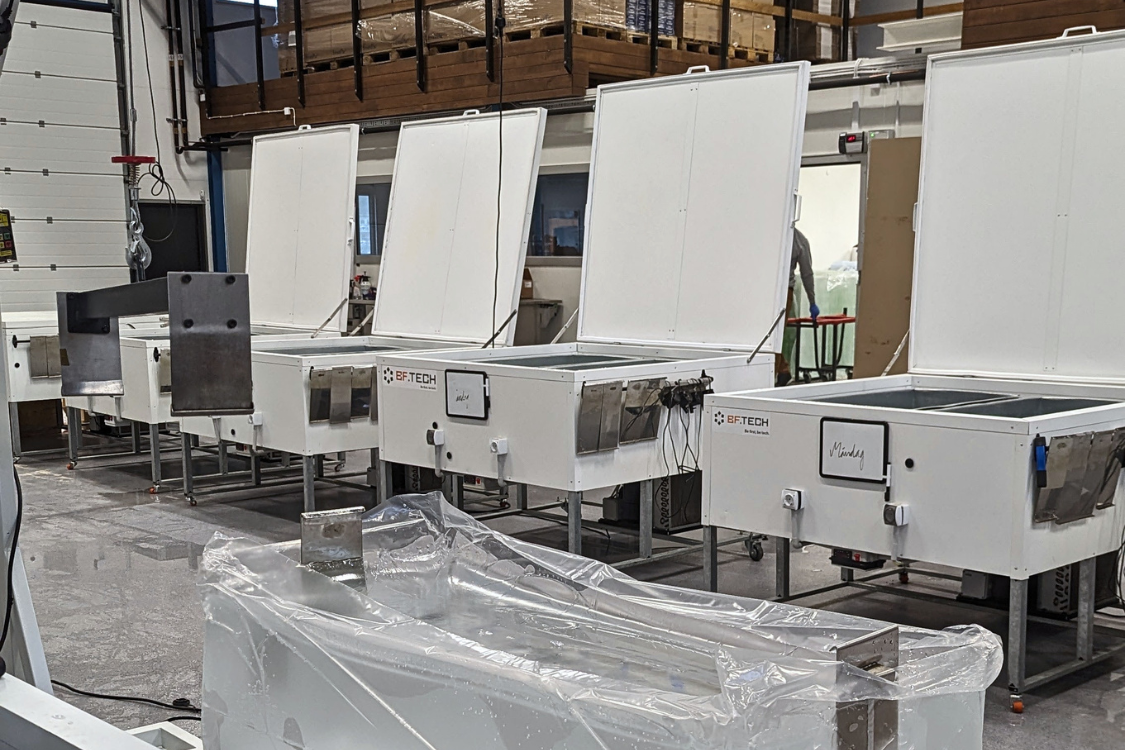
This is where industrial ice block makers enter the picture. Machines like the BF Tech line of ice block makers apply the same directional freezing principle that the cooler method demonstrates — but with precision-engineered refrigeration circuits, controlled insulation geometry, and programmable freezing cycles that deliver reproducible results at scale. The physics are identical; the engineering makes them reliable.
A commercial ice block maker running directional freezing can produce blocks weighing from 10 to nearly 300 kilograms with optical clarity that no manual method can match — and it can do it continuously, day after day, without variation.
How to Make Clear Ice Cubes Using Directional Freezing at Scale

The production of premium clear ice cubes at a commercial level follows a two-stage process.
First, a directional freezing ice block machine produces a large, structurally uniform block of clear ice — typically measuring 50 × 25 cm or 100 × 50 cm depending on the machine configuration. The block is optically transparent throughout, with all dissolved gases expelled during the controlled freezing process.
Second, the block is cut using a specialised ice band saw — a modified bandsaw designed specifically for ice that produces clean, straight cuts without shattering the structure. The result is uniform, crystal clear ice cubes with precise dimensions, ready for cocktails, events, or retail sale.
This is the complete directional freezing clear ice method at a commercial scale: controlled production, mechanical precision, consistent output.
FAQ
What is directional freezing?
Directional freezing is a method of producing clear ice in which water is frozen progressively from one direction — usually top to bottom — rather than from all sides at once. This pushes dissolved gases and impurities ahead of the freezing front and out of the ice structure, resulting in a transparent, dense block.
How does directional freezing work to create clear ice?
As the freezing front advances in a single direction, dissolved air and minerals are continuously displaced into the remaining liquid water. They never become trapped in the ice lattice. By the time the block is fully frozen, impurities have been pushed to one end, which is removed — leaving only optically clear ice.
What is the directional freezing clear ice cooler method?
It's a home-scale technique in which an insulated container filled with filtered water is placed in a freezer without a lid. The insulated walls and base prevent heat loss from the sides and bottom, so the water freezes from the top down. The cloudy bottom section is discarded, and the clear upper portion is used. It works, but cannot be scaled reliably beyond small volumes.
Can directional freezing be used for commercial ice production?
Yes — and this is where it becomes most valuable. Industrial ice block makers apply directional freezing principles with engineering precision, producing large, clear blocks continuously and consistently. This is the standard approach for bars, restaurants, catering businesses, and professional ice producers who require high volumes of premium ice.
Does the type of water affect directional freezing?
Water quality influences the final result. Filtered water with lower dissolved solids produces clearer ice because there are fewer impurities to expel. However, directional freezing is effective even with standard tap water — it simply removes more material in the process. For the highest optical clarity at a commercial level, filtered water combined with a properly calibrated ice block maker is the recommended approach.



MORE ABOUT THE AUTHOR