Understanding How Long It Takes for Ice Cubes to Freeze
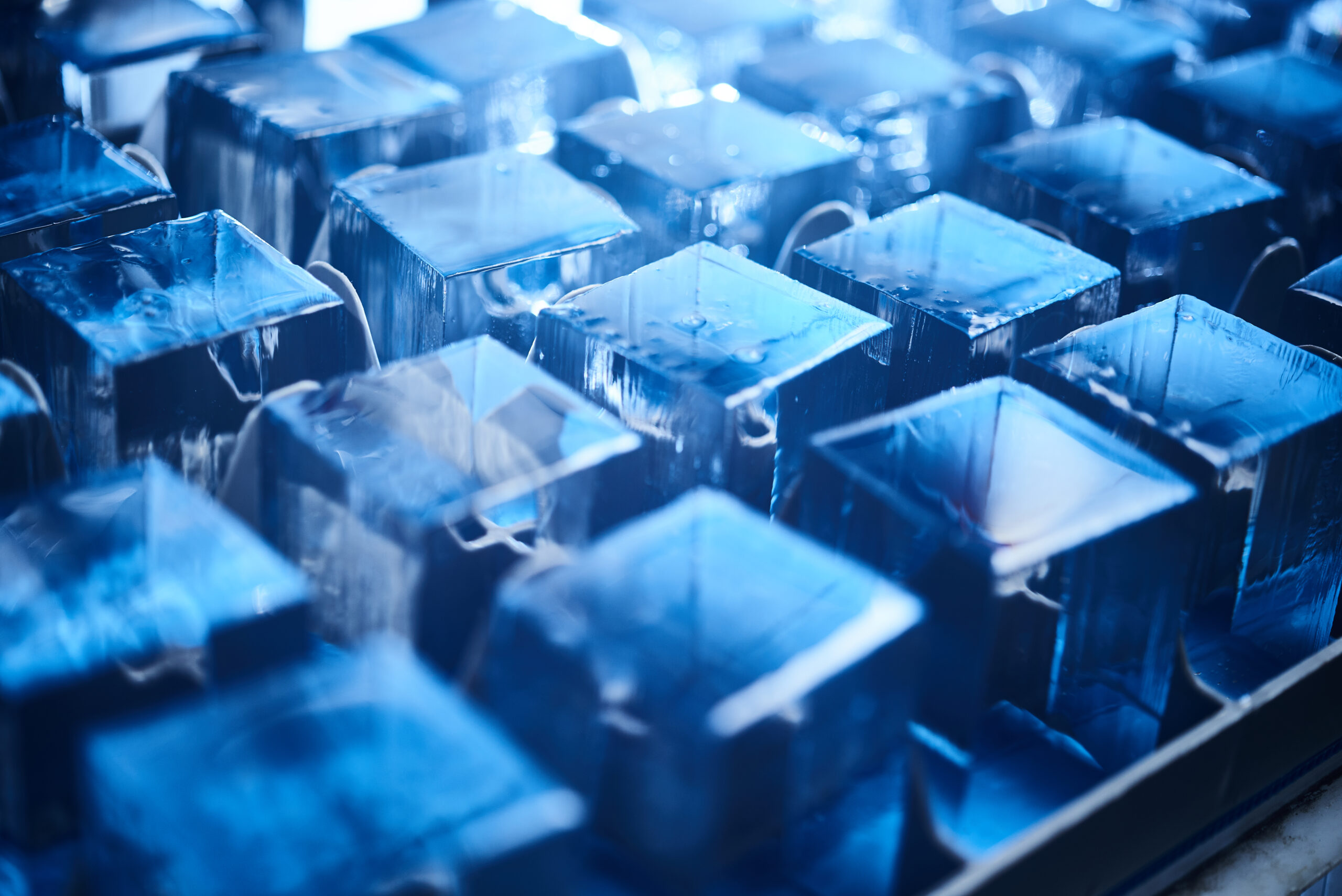
Exploring the Freezing Process
Have you thought about the fact that it may take different time for your ice cubes to freeze? On some occasions, the ice forms in a few hours while on the others, the freezing process takes so much time and seems as if the process would never end.
In this case, you might be wondering ‘How long does it take for water to freeze?‘ and ‘How to make big ice cubes?’
Converting water into ice is not as simple as one might think. A wide range of factors may impact the speed or the magnitude of this transition.
In this article we will investigate why freezing works and the scientific principles that drive the process. What’s more, we will resolve the common query regarding the ice cubes freezing time. We’ll not only give you the necessary tips and tricks to see your ice formation instantly, but we’ll also share the secrets and give you practical advice to help speed up the process.
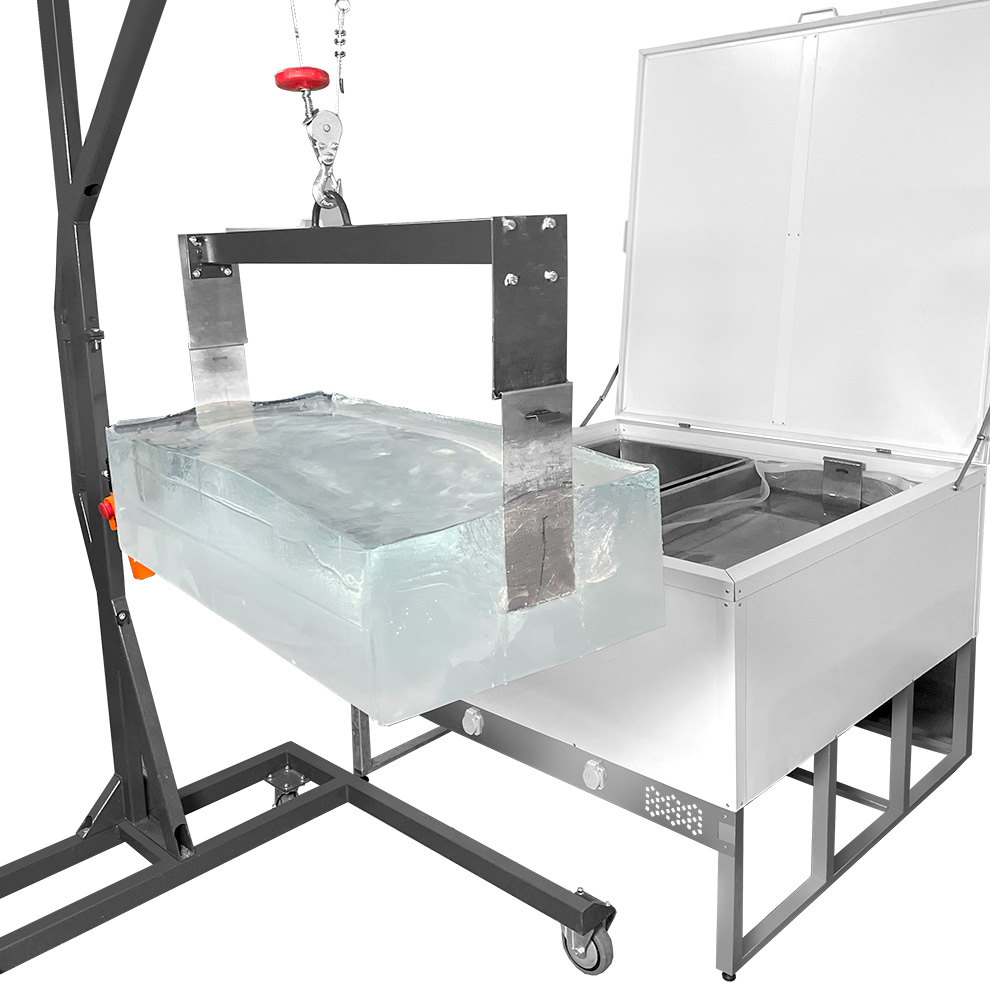
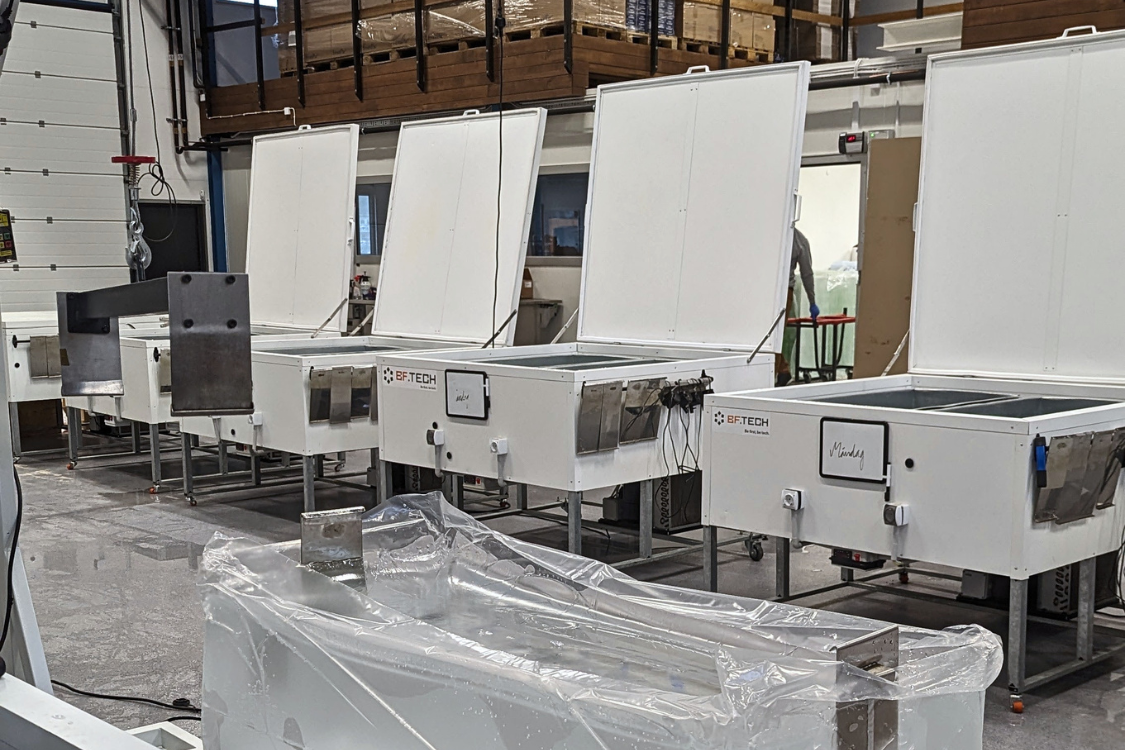
In a standard home freezer set to 0°F (-18°C), standard 1-inch ice cubes take 3 to 4 hours to freeze completely. Larger 2-inch cocktail cubes require up to 24 hours. Commercial massive ice blocks produced by BF Tech equipment take between 12 to 72 hours, depending on the block’s height and ambient conditions
Factors Influencing Freezing Time
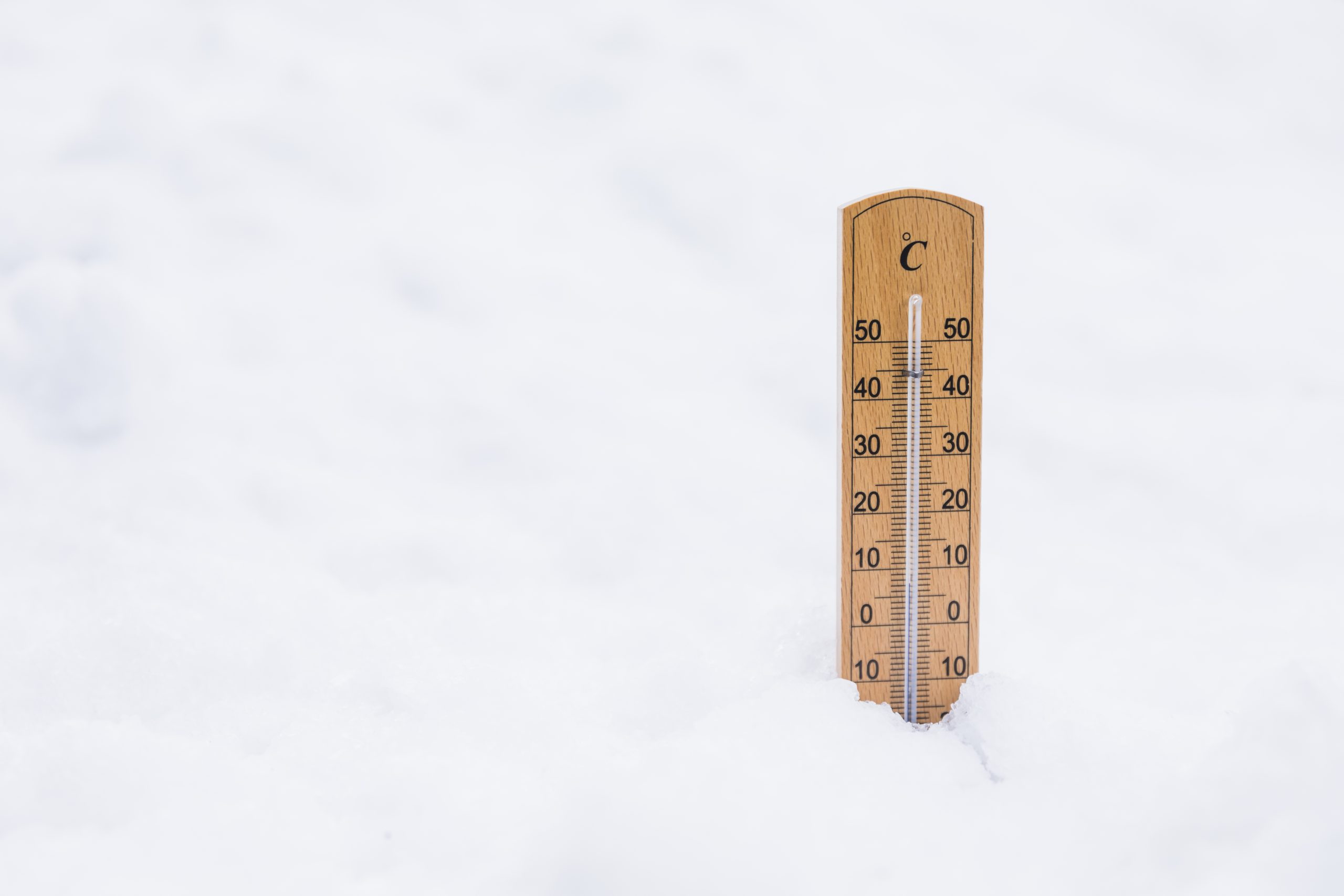

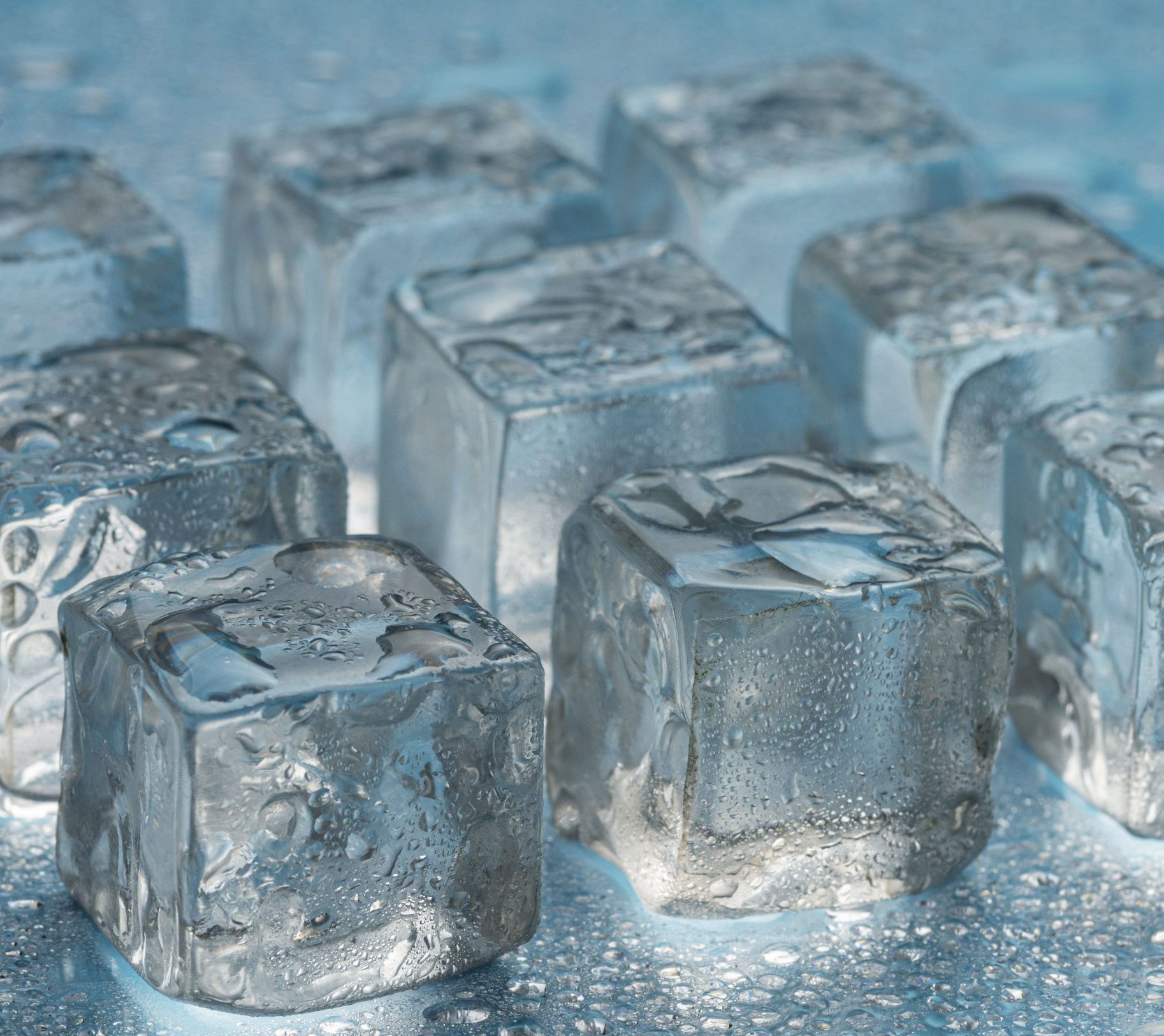
When asking ‘how long does ice cubes take to freeze?’, you must understand that freezing is not just cooling; it is a thermodynamic process called nucleation, where water molecules aggregate into a crystalline structure. Several crucial factors can hasten or delay this transition:
Freezer Temperature and Ambient Air
The baseline temperature for ice formation is 0°F (-18°C). While lowering the temperature further will speed up the process, the relationship is not strictly linear. You must find the “golden mean” where freezing speed is optimized without causing unnecessary energy consumption.
Water Composition and Purity
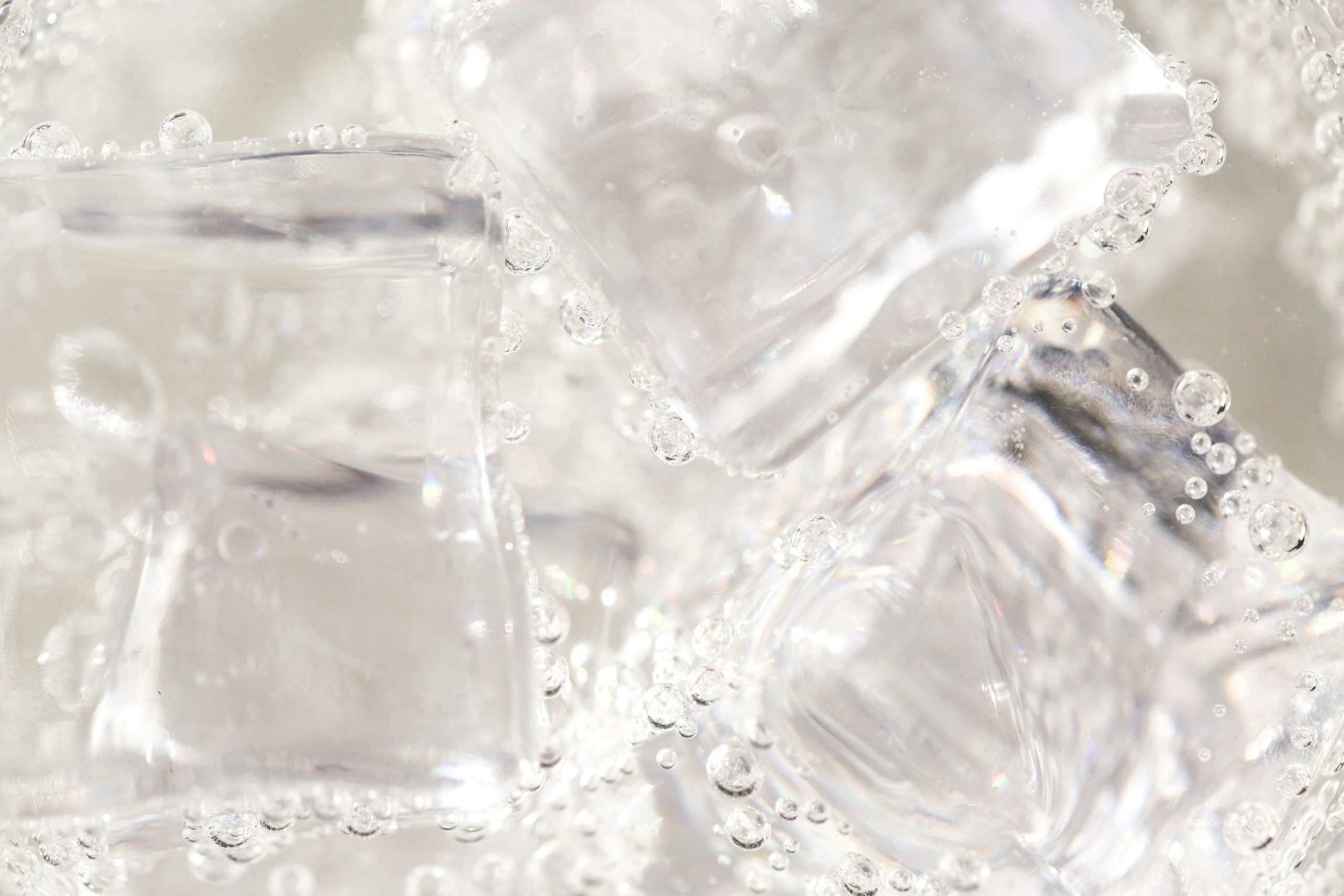
Impurities and dissolved gases in tap water act as obstacles during nucleation, slowing down the freezing process and resulting in cloudy ice. Using filtered or distilled water removes these barriers, allowing the water to freeze faster and producing aesthetically pleasing, clear ice cubes.
Freezer Material and Thermal Conductivity
The material holding the water significantly impacts freezing times due to thermal conductivity. For instance, commercial block ice makers from BF Tech utilize premium metals and advanced direct cooling technology, which extracts heat from the water exponentially faster than typical silicone or plastic ice trays in a home refrigerator.
Agitation and Movement
Surprisingly, gently stirring or agitating the water can lead to quicker freezing. This movement prevents the formation of a supercooled insulating layer around the ice, resulting in a more uniform and rapid freeze.
The Role of Freezer Temperature and Settings
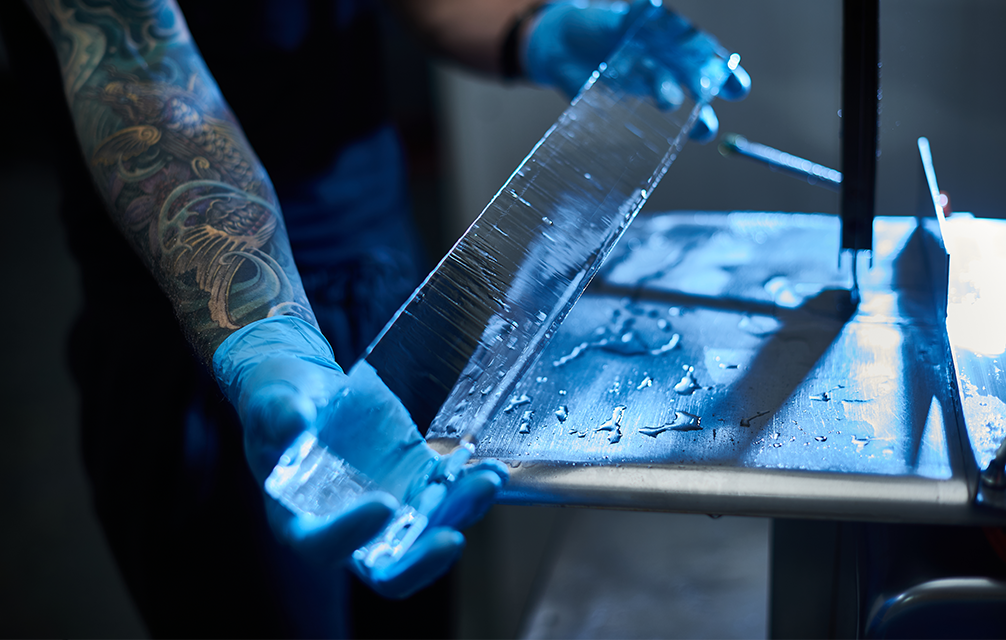
The importance of your freezer’s temperature and its settings can’t be understated when it comes to speeding up the process of making ice cubes.
Simply put, making your freezer colder is an effortless method to ensure water freezes quicker. This is because the chillier the surroundings, the quicker water hits its freezing point and starts to turn into ice.
But, how does this principle apply in everyday scenarios, and what are the best practices for setting your freezer for optimal ice production?
Impact on Freezing Time
The difference in freezing time when adjusting the temperature is not linear. For example, lowering your freezer’s temperature from 0°F to -5°F might reduce the freezing time for a batch of ice cubes, but the energy required to maintain this lower temperature could be significantly more.
Therefore, achieving a balance is essential. Efficient energy use and effective freezing can be maintained by keeping your freezer around the standard 0°F, ensuring it’s not overcrowded (which could hinder air circulation and extend freezing time), and regularly defrosting to avoid ice buildup that could insulate and warm the interior.
Optimal Settings for Ice Making
For clear ice cubes enthusiasts, investing in a block ice maker can make a difference. These devices are specially designed to freeze water more efficiently than standard freezers, often featuring mechanisms to circulate water or minimize air bubbles, thereby speeding up and clarifying ice production.
For example, BFTech’s block ice makers are calibrated to excel within typical freezer temperatures, outperforming traditional methods in both speed and clarity of ice production.
Expert Tips for Faster Freezing
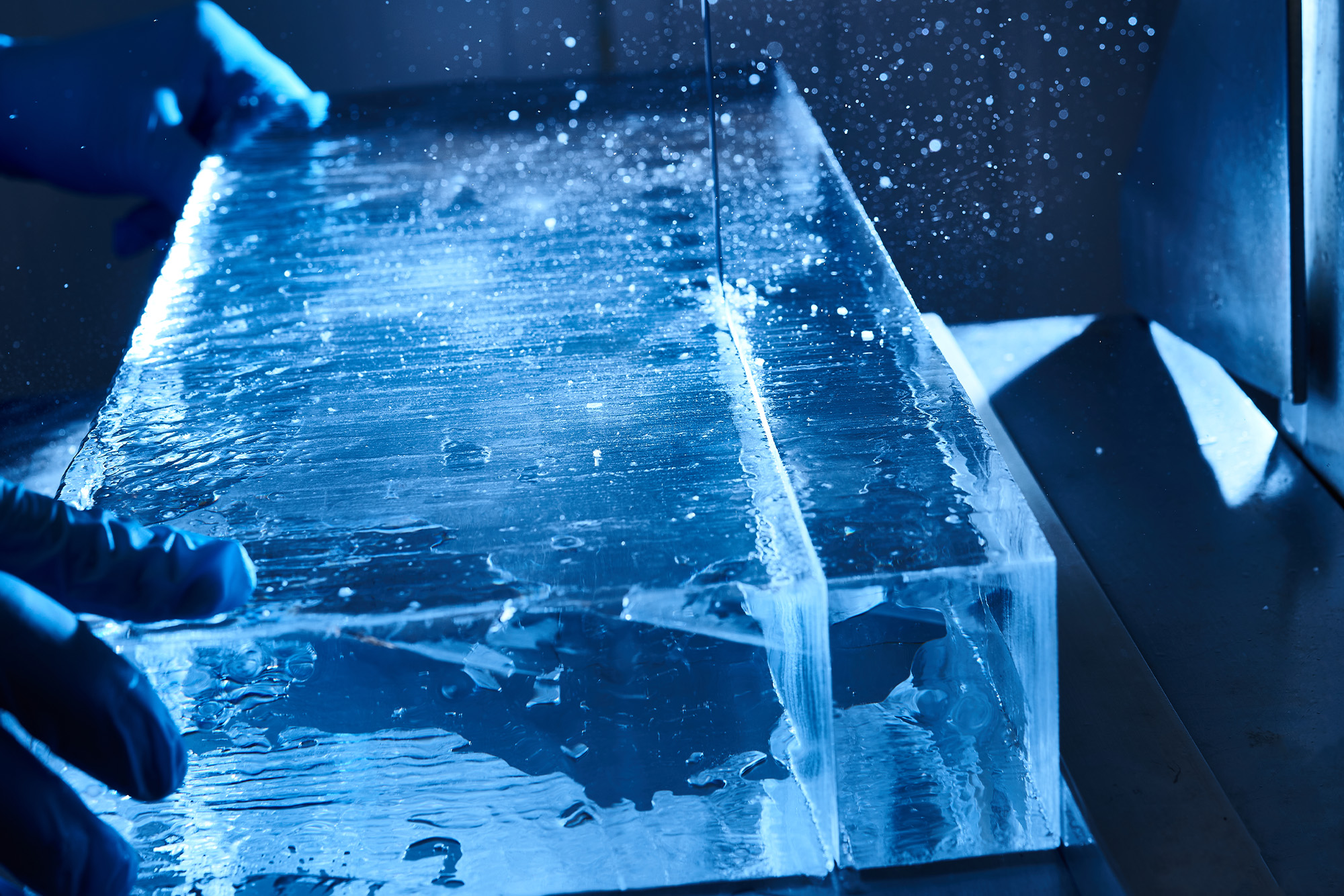
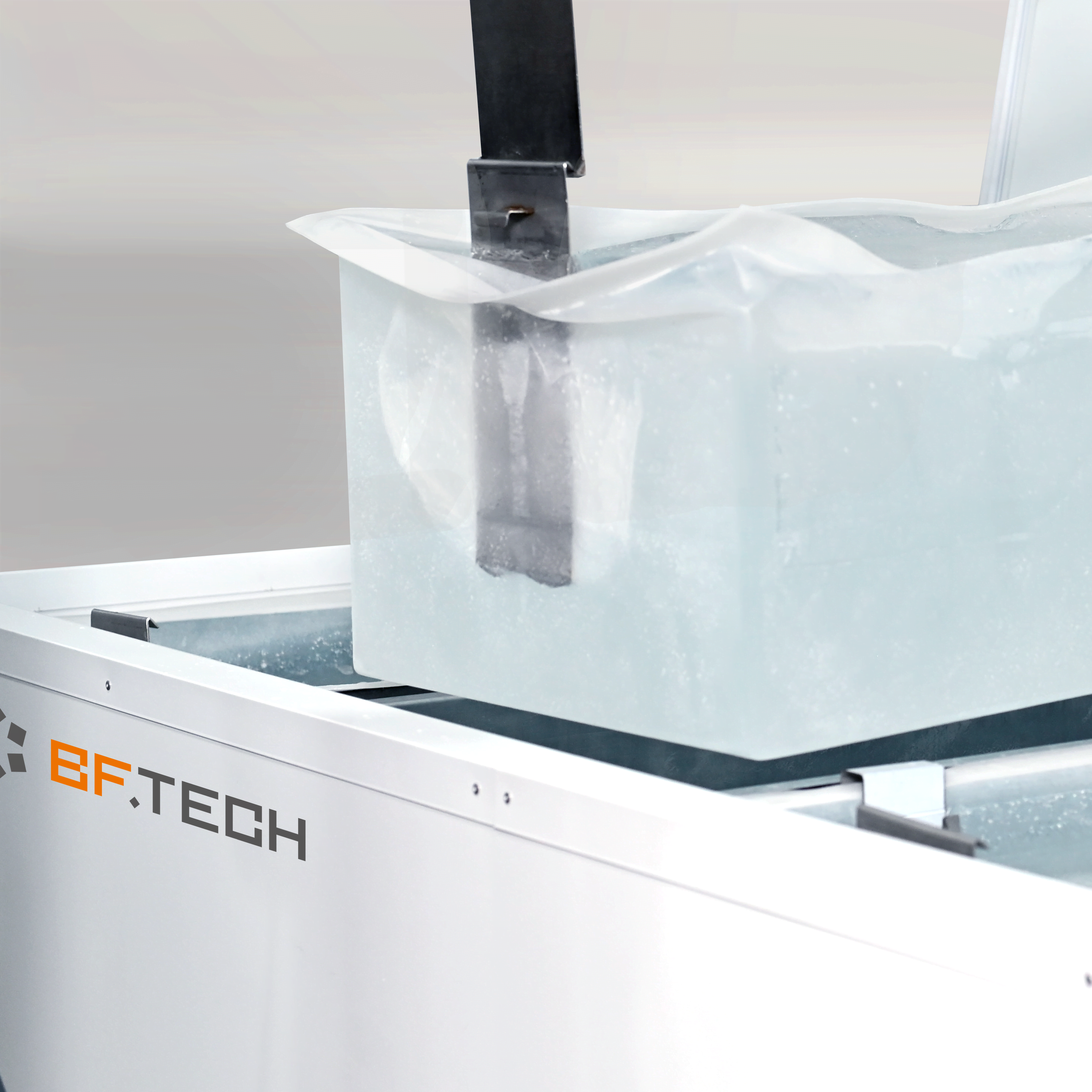
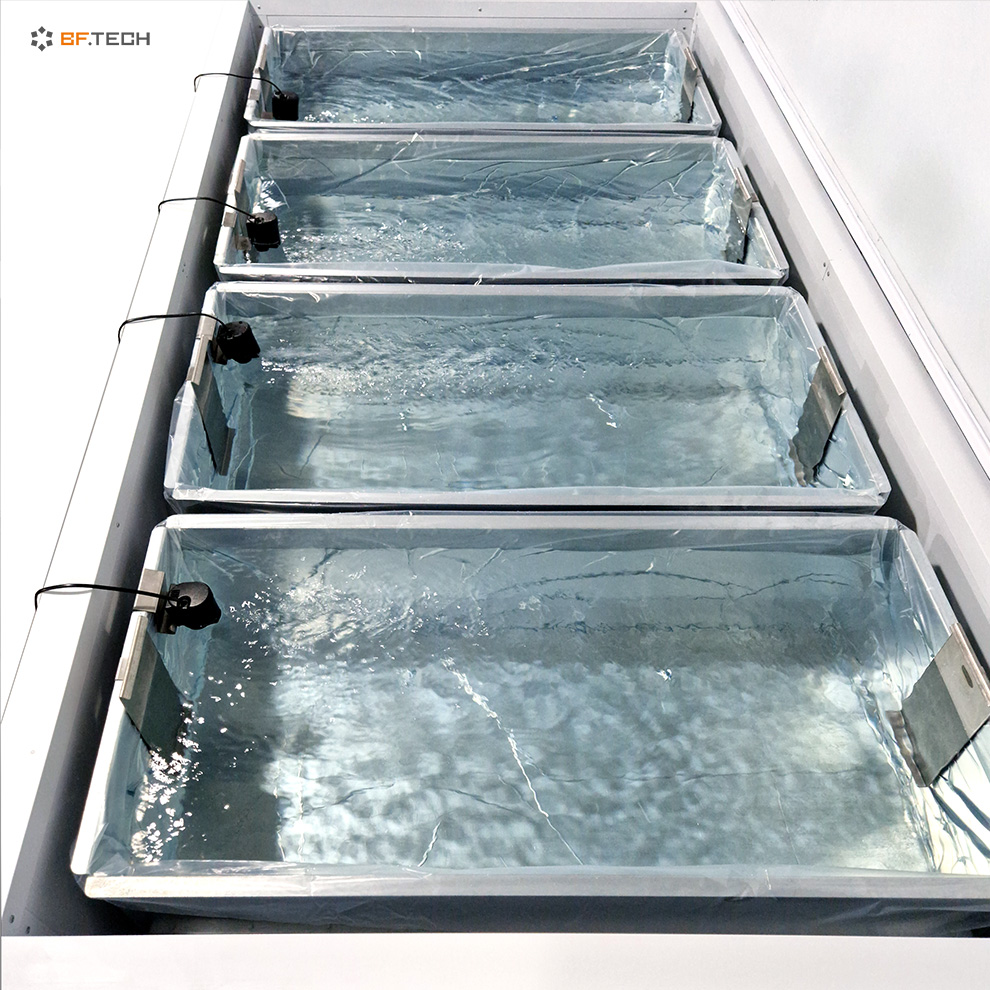
Perfecting the ice cube doesn’t have to involve a lengthy wait. Whether you are a professional mixologist or a home cocktail enthusiast, these scientifically backed tips will significantly reduce your freezing time:
Pre-chill Your Water
Starting with refrigerated water reduces the thermal gap between the water’s initial temperature and its freezing point. This simple step forces nucleation to begin sooner, saving valuable time.
Use Metal Ice Trays
Metal possesses a much higher thermal conductivity than plastic or silicone. A stainless steel or aluminum tray transfers the cold from the freezer to the water much more efficiently, drastically shortening the freezing time.
Minimize Airflow Around the Trays
Ensuring your freezer maintains adequate airflow is vital for its optimal operation. However, limiting the amount of direct air hitting your ice trays can actually enhance the speed of ice formation. The presence of direct airflow tends to lead to an inconsistent freeze and can result in a thin layer of air enveloping the water. This layer acts as insulation, decelerating the freezing process.
Opt for Smaller Ice Cube Sizes
The freezing speed is dictated by the surface-area-to-volume ratio. Smaller cubes have a higher surface area relative to their minimal volume, allowing the cold air to penetrate the center rapidly.
Invest in a High-Quality Ice Maker
For those who cannot afford to wait, BF Tech premium ice makers are a game changer. Designed for the hospitality industry, they employ advanced directional freezing and precision insulation to produce massive, crystal-clear ice blocks significantly faster and with better clarity than any traditional freezing method.
Freezing Time for Large Cocktail Cubes and Commercial Blocks
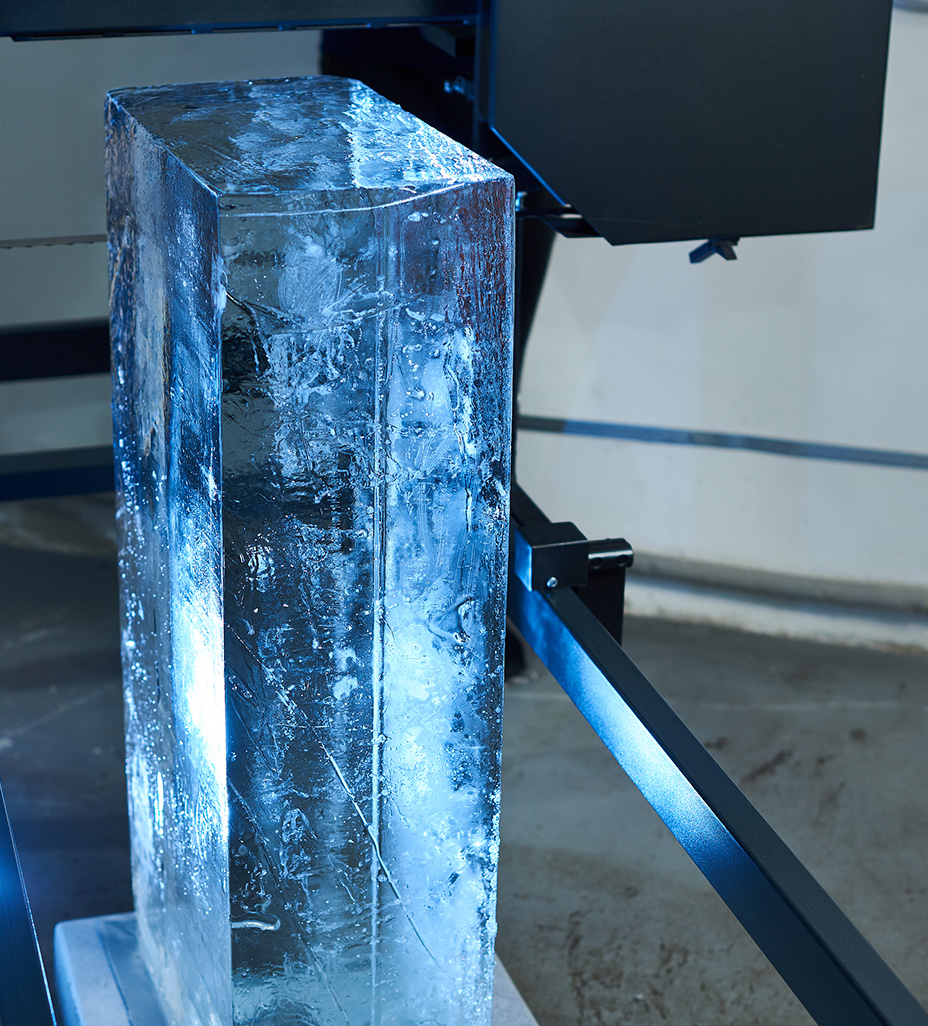
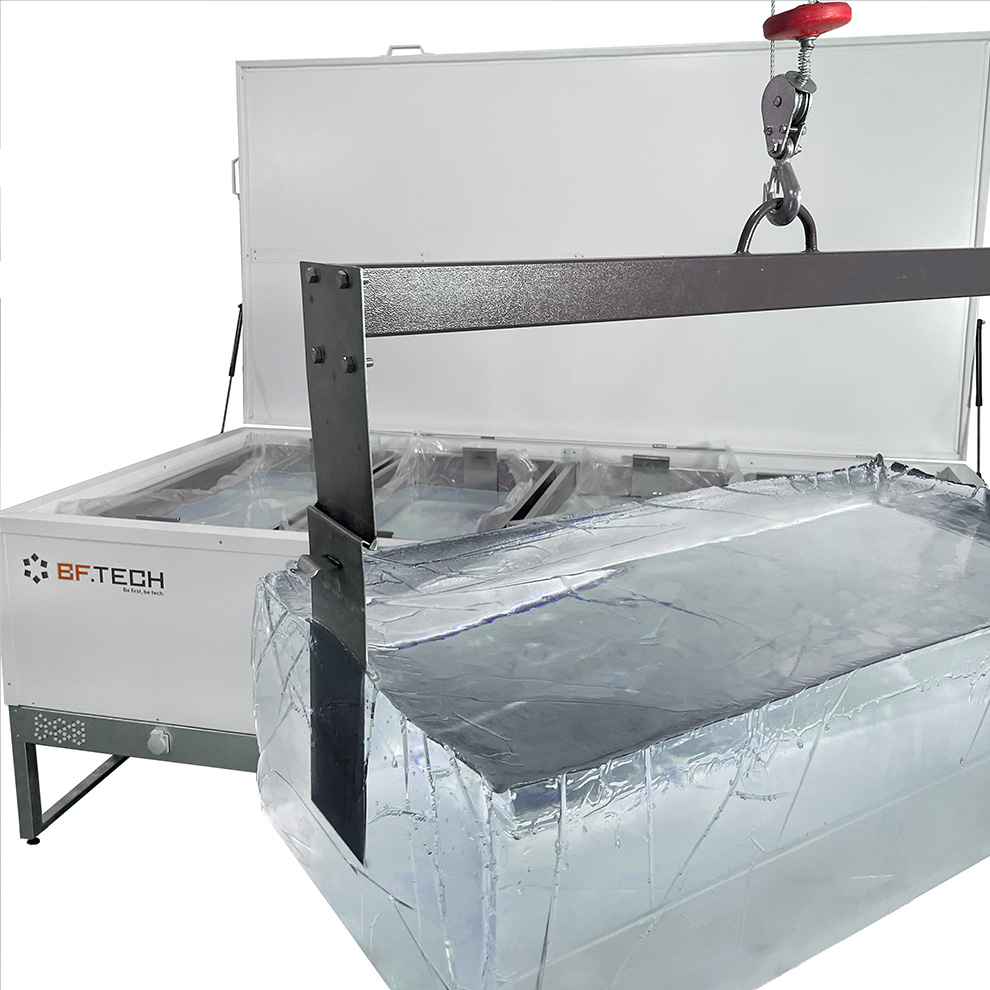
Ice dimensions play a leading role in both aesthetics and functionality. Large, dense ice cubes melt at a significantly slower rate, ensuring premium drinks remain perfectly chilled without rapid water dilution.
So, how to make big ice cubes, and how long do they take? While a 1-inch cube takes 3-4 hours, large 2-inch or 2.5-inch craft ice cubes require at least 24 hours in a standard freezer (-18°C). This extended duration is necessary because the cold environment takes much longer to penetrate the larger volume of water and freeze it entirely to the core.
Factors Affecting Freezing Time for Large Ice Cubes
Several factors can influence how long it takes for big ice cubes to freeze, including:
Freezer temperature: A lower temperature setting can slightly speed up the process.
Water temperature: Starting with cold water can reduce freezing time.
Tray material: Metal trays or molds conduct cold more efficiently than plastic, facilitating quicker freezing.
Positioning in the freezer: Locating the ice tray in the freezer’s coldest spot, typically at the back, can expedite ice cube formation.
Enhancing Freezing Efficiency for Large Ice Blocks
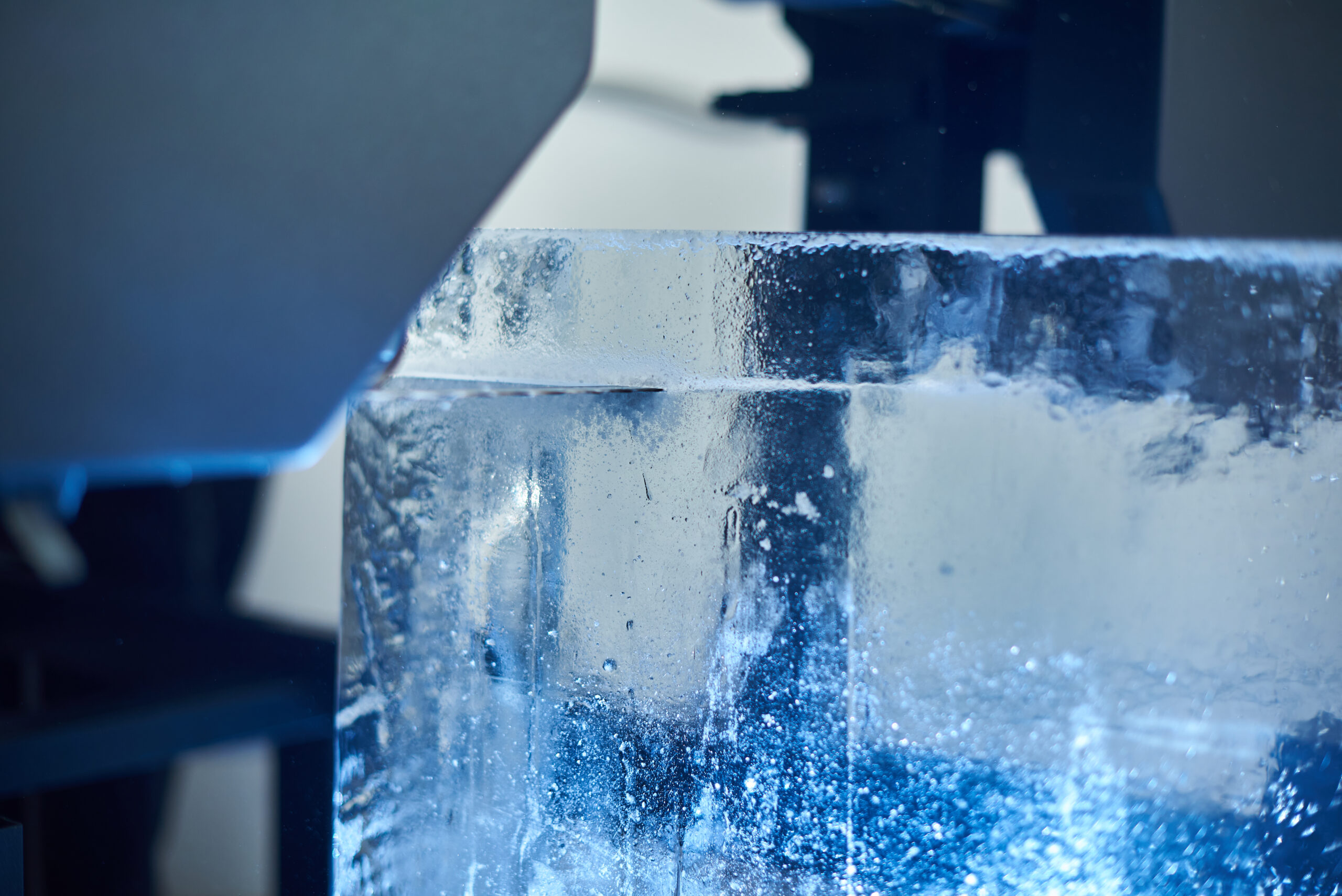
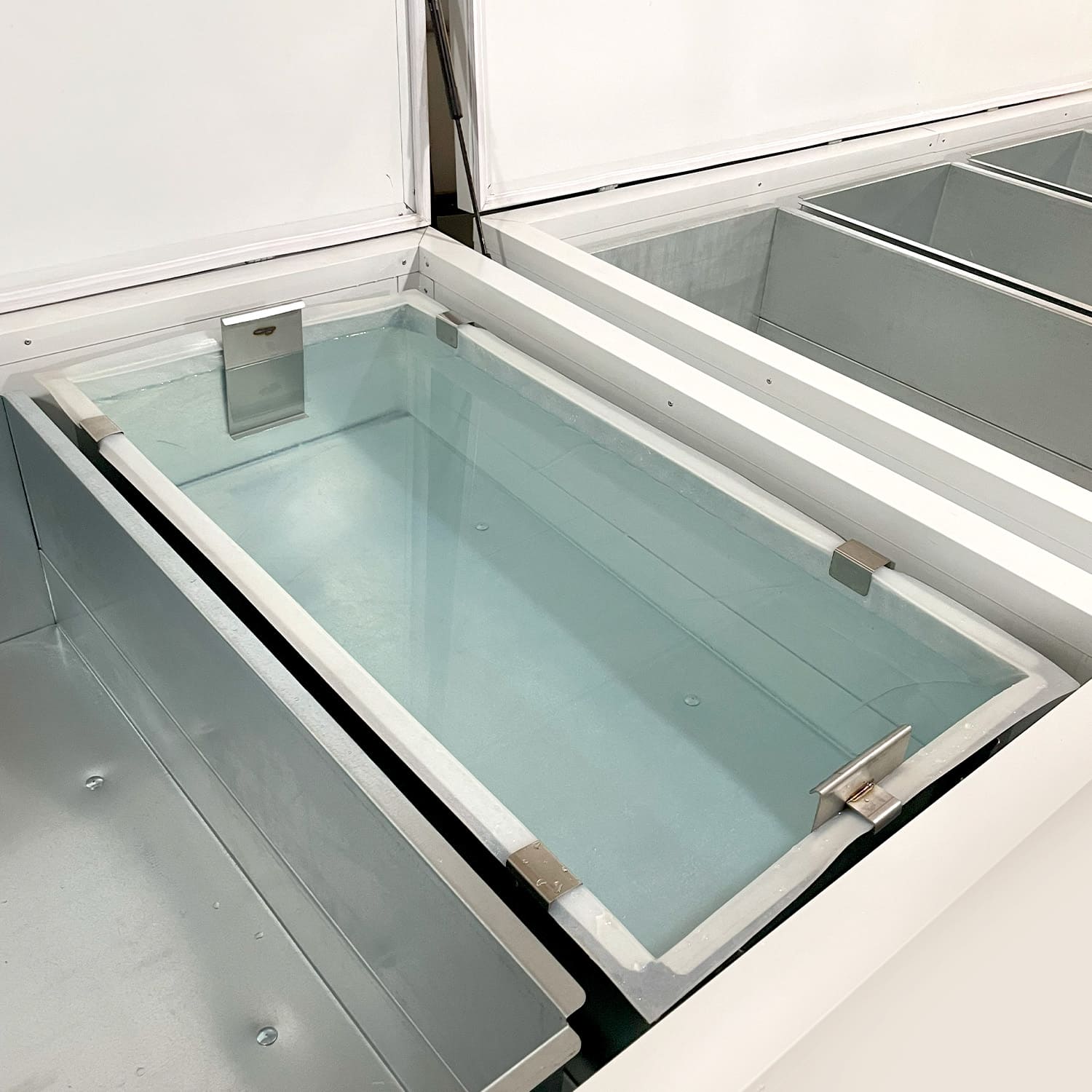
Maximizing the efficiency of freezing large ice blocks is essential, especially for those not using block ice makers from BFTech.
Here’s how to streamline the process:
1. Optimal Freezer Settings
For large ice blocks, maintaining your freezer between -5°F and 0°F (-20°C to -18°C) balances efficiency and energy use. This range speeds up freezing while minimizing excess consumption.
2. Water Quality
Using filtered or distilled water not only speeds up freezing but also ensures your ice is crystal clear. Impurities slow down freezing and can cloud your ice, detracting from its appearance.
3. Advanced Insulation
The construction of your freezer impacts freezing times. BFTech’s block ice makers are engineered with superior insulation and materials, promoting faster and more uniform freezing of large blocks.
4. Controlled Agitation
Some block ice makers incorporate mechanisms to gently agitate the water during freezing. This prevents the formation of supercooled layers, allowing for quicker and more consistent freezing.
Conclusion
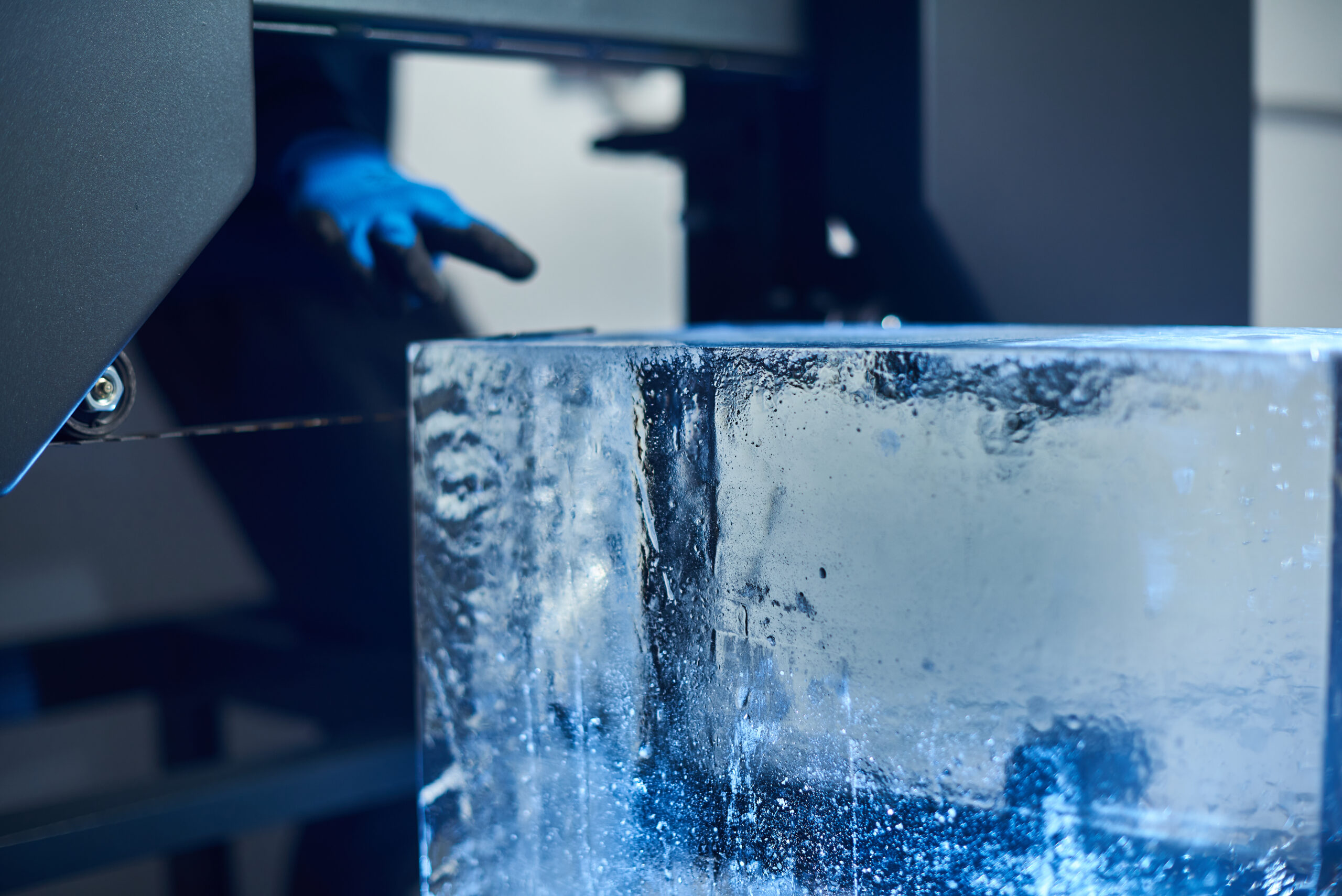
No matter whether you are a professional bartender, a restaurant owner, or simply a person who loves well-prepared drinks at home and needs ice for cocktails, knowing the details of how long it takes for ice cubes to freeze is all about improving your beverage experience.
We have explored numerous factors that influence rapid freezing as well as how to make the process quicker and clearer. Plus we answered the question ‘How long does ice take to freeze?’ In fact, the path of water to ice, which at first glance might seem to be a simple one, is affected by various factors ranging from the settings of the freezer, water purity, and the type of basic trays used. With adjustments of these parameters, you will have a chance to lower the time necessary for your ice cubes to freeze, therefore, you will be able to get ice cubes whenever you need them.
You can also refine this process further by investing in a good ice maker, and BFTech does an excellent job in this area. Their ice makers are the most effective in terms of efficiency and clarity compared to traditional methods. The right tools and knowledge can totally change your ice-making process for the better.
FAQs
What is the optimal freezer temperature for fast ice cube formation?
The optimal temperature for efficient ice cube formation is 0°F (-18°C). This setting strikes the perfect thermodynamic balance between rapid freezing and efficient energy consumption.
Does using hot water speed up the freezing process?
No, for standard home freezing, using cold water is faster. While the Mpemba effect suggests hot water can sometimes freeze faster under highly specific laboratory conditions, in a standard kitchen freezer, hot water simply takes longer to cool down to the freezing point.
Can ice freeze in 30 minutes?
It is highly unlikely for water to completely freeze into solid cubes in 30 minutes in a standard home freezer. While a thin layer of surface ice (initial solidification) may form, a standard 1-inch ice cube requires a minimum of 3 to 4 hours to freeze completely to the core.
How do you freeze ice cubes faster?
To freeze ice cubes faster: use pre-chilled filtered water, pour it into highly conductive metal ice trays, reduce your freezer temperature slightly, and ensure the trays are not blocked by other items to allow maximum cold air circulation.
How long does it take for ice to fully freeze?
Standard 1-inch ice cubes take 3 to 4 hours to fully freeze at 0°F (-18°C). Large 2-inch cocktail cubes take up to 24 hours. The precise time fluctuates based on water volume, starting temperature, tray material, and freezer efficiency.
What factors affect the freezing time of ice cubes?
Several factors influence how long it takes for ice cubes to freeze. The freezer temperature plays a major role—lower temperatures speed up the process. The size and shape of the ice tray also matter, as smaller cubes freeze ice faster than larger ones. Using cold vs. warm water can change how long for ice cubes to freeze, with warm water sometimes freezing faster due to the Mpemba effect. Additionally, the freezer’s efficiency, air circulation, and the number of items inside can impact how long it takes for water to freeze. To make ice cubes faster, consider using a metal tray, increasing freezer settings, or using pre-chilled water.



MORE ABOUT THE AUTHOR